
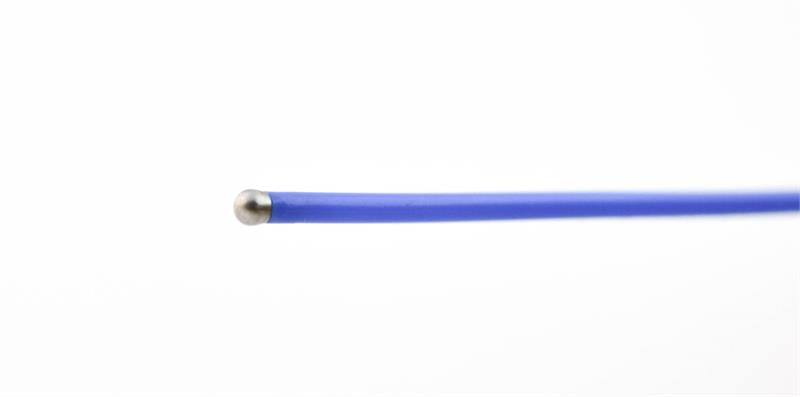
A Bugbee electrode purchasing decision involves more than a French size and a length. Urology, procurement, biomedical engineering, and sterile processing teams need an identifiable device, a compatible equipment configuration, and instructions that the facility can implement. This guide brings together the FDA’s manufacturer-instruction framework, CDC reprocessing recommendations, and the limited office-fulguration context in the 2024 AUA/SUO bladder-cancer guideline. It is a procurement and readiness reference for healthcare professionals, not a procedure protocol or authorization to use a particular electrode.
Keep clinical eligibility separate from product selection
Clinical eligibility and device selection are related but distinct decisions. In the 2024 AUA/SUO non-muscle-invasive bladder-cancer guideline, statement 35 says that a clinician may consider in-office fulguration as an alternative to resection under anesthesia for a patient with a history of low-grade Ta disease and a noted sub-centimeter papillary tumor or tumors. The statement is designated Expert Opinion. It should not be broadened into a claim that any newly identified bladder lesion is appropriate for office fulguration.
The guideline does not identify a Minerva model, specify an electrode size, or establish compatibility with a particular generator or scope. A clinical team should determine whether the contemplated intervention fits the patient and current clinical guidance, then evaluate the device against its labeling. The distinction matters when educational content appears beside a catalog: a product photograph or a familiar instrument name is not evidence that a clinical scenario is appropriate.
For an equipment review, the facility can document the intended clinical context without turning the purchasing worksheet into a treatment protocol. Patient selection, anesthesia planning, tissue sampling, and follow-up remain clinical responsibilities. The ordering record should state the requested device and the questions that need manufacturer or clinical confirmation, rather than embedding an assumed technique.
Identify the exact model, tip, size, and length
The Minerva Bugbee collection contains ball electrodes, separately named needle electrodes, and related equipment. A selection should therefore begin with the complete product name and ordering SKU, not the collection name alone. Minerva’s Bugbee ball electrodes are reusable and supplied nonsterile, as confirmed by Minerva for this catalog review. A needle-electrode listing should not be treated as the same device merely because it has a matching diameter or appears in the same collection.
Two examples illustrate the importance of retaining the whole identifier: MV-27770AA-53 is listed as 3 Fr × 53 cm, while MV-27770B-53 is listed as 5 Fr × 53 cm. The common 53 cm length does not make their diameters interchangeable. Likewise, a model designation and a distributor’s ordering SKU may differ; the purchase request should preserve both when the listing distinguishes them.
The catalog includes ball-electrode lengths of 45, 53, 67, and 98 cm on selected models, with listed French sizes extending from 3 to 9 Fr. Those ranges are not a promise that every combination exists or is available from stock. The Bugbee size and length reference is a navigation aid; the specific item page and confirmed product labeling govern the order.
Dimensions should be copied as labeled rather than silently converted into a different specification. “French diameter,” “ball-tip diameter,” “overall length,” and “working length” are not interchangeable labels. If the manufacturer documentation and catalog terminology differ, the team should resolve the discrepancy before approving a substitute. This guide does not infer a working-channel clearance or a usable reach from catalog dimensions alone.
Build a complete compatibility review
A compatibility review should name the exact scope, cable, generator, and electrode configuration proposed for use. The facility should compare the relevant manufacturer instructions and ask for written clarification where the combination is not established. A description such as “standard monopolar generator” or “standard cystoscope” is too broad to serve as a model-specific confirmation. The same caution applies when an older purchase order names only a French size.
A practical review record can separate confirmed facts from open questions. Confirmed facts include the ordering SKU and the catalog dimensions; open questions may include connector requirements, scope-channel suitability, or which instructions apply to a particular version of an accessory. Keeping those categories separate prevents a sales description from being copied into a facility record as though it were manufacturer validation.
Related cables and generators shown in a collection are browsing conveniences, not proof that every item connects to every electrode. If a replacement cable is being considered, its identity should be reviewed alongside the existing equipment rather than selected by product-family resemblance. The facility can retain the supporting documentation with the purchasing decision so that later reorders do not repeat assumptions that were never confirmed.
Use an item-specific purchasing and receiving workflow
- Identify the requested item. Record the complete model, ordering SKU, tip type, French size, and labeled length. Compare that information with the current product page rather than relying on an abbreviated historical description.
- Document the intended equipment configuration. Include the scope, cable, and generator models if compatibility requires review. Send unresolved questions with the request instead of marking a combination compatible without supporting information.
- Request the relevant instructions. Obtain the applicable device instructions and any manufacturer clarification needed by biomedical engineering or sterile processing. A sales brochure can help identify a product, but it should not be substituted for model-specific instructions.
- Start the quote on the item page. Open the selected product and use its quote-request option, including the required quantity. Pricing, availability, and lead time are confirmed during the quotation process; a catalog listing alone is not an inventory commitment.
- Reconcile the delivered item. Compare the received model and labeling with the approved order before accepting a substitution. Refer discrepancies in model, dimensions, packaging, or documentation to the responsible supplier and facility team.
- Complete facility readiness review. Confirm that the applicable processing and use requirements can be followed before clinical release. Retain the information needed for future reorders, staff reference, and traceability under local policy.
This is a proposed administrative workflow, not a validated clinical-use sequence. Each facility should assign responsibility for the approval steps and align the documentation with its own policies. Procurement can coordinate information, but it should not substitute a commercial equivalence judgment for clinical, biomedical, or processing review.
Plan reprocessing from the device instructions
The FDA overview of reusable-device reprocessing describes a detailed multistep process and emphasizes complete adherence to labeling instructions. It also explains that inadequate cleaning can leave soil that compromises subsequent disinfection or sterilization. “Reusable” is therefore a device characteristic, not a complete processing instruction and not a basis for selecting a generic cycle.
The FDA’s information for reusable-device manufacturers explains the responsibility to provide adequate, usable, validated reprocessing instructions. For a purchasing team, the practical implication is to request the instructions that apply to the exact device and confirm that the facility can implement them. An assumption based on another electrode’s appearance or another instrument’s tray assignment is not an adequate replacement.
The CDC disinfection and sterilization recommendations call for cleaning before high-level disinfection or sterilization, and for sterilization of critical devices that enter normally sterile tissue or the vascular system. They also address cleaning and sterilization of reusable endoscopic accessories that break the mucosal barrier. These are classification and processing principles, not a device-specific temperature, exposure time, or maximum number of reuses for a Bugbee electrode.
CDC further recommends comparing instrument and sterilizer instructions and resolving conflicts with the manufacturers. A facility review should therefore consider the instrument, processing equipment, packaging or container, and applicable chemical instructions together. If a required instruction is unavailable or incompatible with the facility’s process, the issue should be resolved before a device is released for use rather than filled in from a generic internet protocol.
Minerva’s supplied-nonsterile designation should remain visible in the purchasing and receiving information. It should not be omitted merely because the device is reusable. This guide deliberately provides no cleaning chemistry, sterilization cycle, contact time, or reuse limit; those details must come from the applicable instructions and the facility’s approved procedures.
Keep a practical readiness and reorder record
A short readiness record can make the distinction between purchasing information and clinical authorization explicit. The following checklist is proposed for facility review; it is not a regulatory form or a claim that completing it alone establishes safe use. Each row should identify the document or responsible reviewer that resolves the question.
| Review item | Record or confirmation |
|---|---|
| Product identity | Model, ordering SKU, tip type, French diameter, and labeled length. |
| Equipment configuration | Scope, cable, and generator models; applicable compatibility documentation. |
| Supply and processing | Supplied condition, current device instructions, and facility processing review. |
| Receipt and substitutions | Delivered identity matches the approved order; discrepancies are resolved. |
| Reordering | Approved identifiers, requested quantities, and any unresolved availability questions. |
The record should distinguish a confirmed answer from a blank field. For example, a missing connector specification should remain an open question, not become “universal” in the next version of the worksheet. If product information changes, the prior decision should be revisited rather than automatically transferred to the new item. Staff can use the record to find the governing documents instead of relying on a remembered catalog description.
Inspection requirements also belong in the applicable device instructions and facility process. The CDC recommendations on equipment integrity call for inspecting surfaces for breaks that could impair processing and addressing equipment that no longer functions as intended or cannot be appropriately processed. A purchasing article cannot establish an electrode’s condition, remaining life, or readiness for another use from a photograph or model number alone.
Frequently Asked Questions
Are Minerva’s Bugbee ball electrodes reusable and sterile on arrival?
Minerva’s Bugbee ball electrodes are reusable and supplied nonsterile. Those terms describe different attributes and should both remain visible in the ordering information. Preparation, inspection, and reuse must follow the instructions applicable to the selected model and the facility’s approved process.
Does matching French size and length prove compatibility?
No. The selection should also be checked against the exact scope, cable, generator, and applicable device instructions. The catalog dimensions are useful ordering information, but they are not a universal compatibility certificate or an assurance that two models can be substituted.
Are the needle electrodes in the same collection the same as ball electrodes?
No. The collection includes separately named needle and ball electrodes, and the full product designation should be retained in the order. Their presence in one collection does not establish clinical equivalence; device selection and intended use should be confirmed against the relevant labeling.
Does the AUA/SUO office-fulguration statement apply to every bladder lesion?
No. The cited 2024 statement specifically concerns a history of low-grade Ta disease with noted sub-centimeter papillary tumors and is designated Expert Opinion. It neither names a Minerva electrode nor establishes a technique, power setting, or device configuration for an individual patient.
Where should a quote request begin?
The request begins on the individual product page through its quote-request option. The requester should identify the exact model and quantity and include equipment details when compatibility needs review. The collection is a browsing and comparison destination, not a substitute for the item-specific request.
Related Minerva resources
The Bugbee ordering checklist provides a shorter purchasing reference, while the Bugbee terminology page distinguishes the catalog terms. Teams reviewing other instruments can consult the article on reusable flexible cystoscopy graspers and biopsy forceps. The separate endoscope reprocessing overview concerns endoscope workflows; it should not be treated as an electrode-specific processing protocol.
Required reusable cable
The required reusable cable is the reusable Storz-style Bugbee electrode cable, SKU MV-11-1260UR. Request this cable with the electrode unless the required reusable cable is already available at the facility. Confirm the exact electrode, cable, and generator configuration against the applicable manufacturer instructions before use.
This article is for informational purposes for healthcare professionals. It does not constitute medical advice or replace clinical judgment. Always follow institutional protocols and the manufacturer’s instructions for use. Product selection and clinical eligibility require model-specific and patient-specific review.