
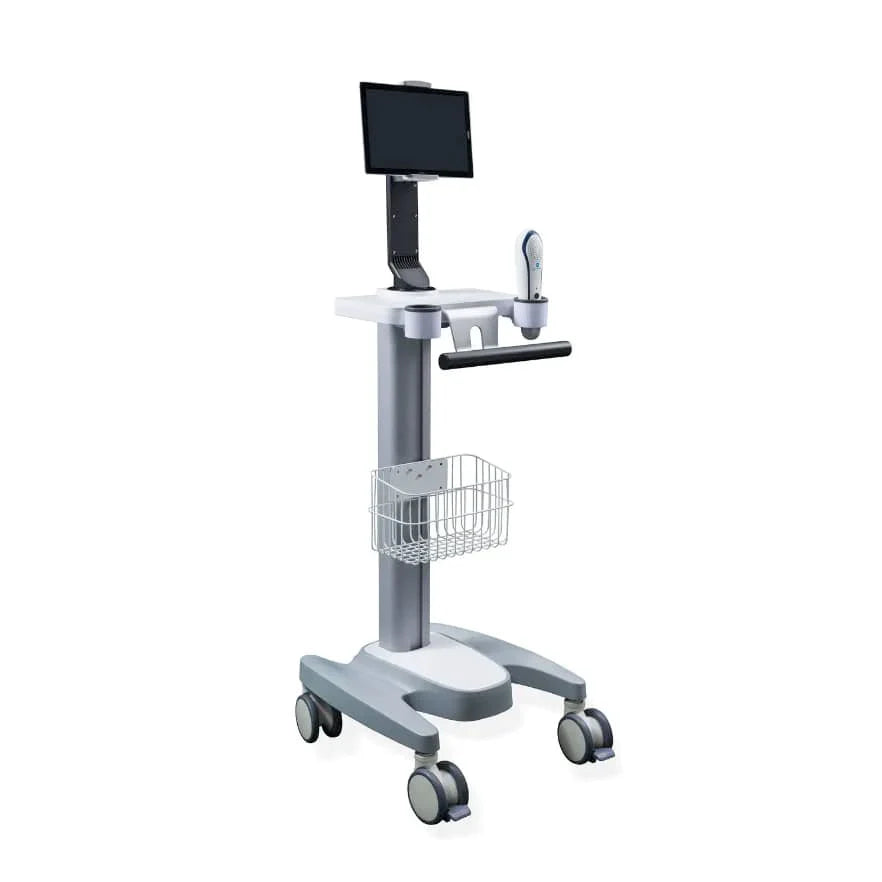
For urologists, reliable post‑void residual (PVR) measurement is fundamental to diagnosing urinary retention, characterizing incontinence, and monitoring neurogenic bladder over time. Portable bladder scanners now provide fast, non‑invasive volume assessment at the bedside or in clinic, reducing dependence on catheterization and improving patient comfort. Minerva Health Solutions offers a range of handheld and cart‑based bladder scanners designed specifically to streamline these workflows across ambulatory urology, operating rooms, and long‑term care facilities.
Urinary retention assessment and management
PVR measurement by bladder scan allows objective quantification of urinary retention without the infection risk and discomfort associated with diagnostic catheterization. Routine scanning enables earlier identification of clinically significant residuals, supports differentiation between obstructive and functional etiologies, and allows more precise titration of medical or procedural interventions.
Minerva’s handheld options, such as the MDPro M4 and M2, provide 3D ultrasound‑based bladder volume calculations with accuracy around ±7%, delivering results in seconds at the point of care. These devices are particularly useful in busy urology clinics or emergency departments, where rapid decision‑making is critical and providers need simple, easy‑to‑learn interfaces with configurable scan modes (Easy, Expert, Intelligence) to match user experience levels.
MDPro M4 Handheld Bladder Scanner
Preventing post‑operative urinary retention (POUR)
Perioperative protocols increasingly recommend non‑invasive bladder scanning as the first‑line assessment tool for suspected POUR, rather than reflex catheterization. Immediate post‑anesthesia care unit (PACU) scanning confirms adequate voiding, flags high‑risk patients, and helps avoid unnecessary insertion of indwelling catheters that can increase catheter‑associated urinary tract infection (CAUTI) risk.
Portable scanners from Minerva Health Solutions are designed for mobility across operating rooms, recovery bays, and same‑day surgery units, enabling staff to follow clear scan‑threshold‑catheter algorithms. For surgery centers, a shared portable system can be used pre‑operatively to document baseline function, post‑operatively to guide timely void trials, and before discharge to ensure no occult retention is missed, supporting quality metrics and accreditation requirements.
Neurogenic bladder assessment and treatment optimization
In patients with spinal cord injury, multiple sclerosis, Parkinson disease, or diabetic neuropathy, serial PVR monitoring is essential to protect upper tracts and guide long‑term management. Bladder scanning allows clinicians to track trends in residual volumes non‑invasively, adjust intermittent catheterization schedules, and gauge response to pharmacologic therapies such as antimuscarinics or alpha‑blockers.
Minerva’s portfolio includes both handheld and cart‑mounted scanners with large data storage and export options, supporting longitudinal documentation across hundreds to thousands of scans. For multidisciplinary neuro‑urology clinics, the ability to quickly retrieve prior measurements at the device or integrate volume data into electronic records helps align neurology, rehabilitation, and urology teams around objective parameters instead of solely symptom reports.
Distinguishing incontinence phenotypes and guiding treatment
Accurate PVR measurement is critical when differentiating stress, urge, overflow, and mixed incontinence, especially in complex pelvic floor patients. Elevated residuals may point toward detrusor underactivity or outlet obstruction, where anticholinergic therapy, invasive stress‑incontinence surgery, or aggressive pelvic floor rehabilitation could worsen symptoms if used inappropriately.
By incorporating bladder scanning into initial continence evaluations, clinicians can safely rule out significant retention before escalating pharmacologic or surgical interventions. Minerva Health Solutions supports this workflow in outpatient pelvic floor and urogynecology settings through compact systems like the M5 and M7, which provide 3D imaging, user‑friendly touchscreens, and rapid scanning suitable for high‑throughput clinics.
Optimizing continence care in long‑term care facilities
In skilled nursing and long‑term care environments, routine bladder scanning reduces unnecessary catheter placement, supports CAUTI reduction initiatives, and standardizes continence assessment across providers and shifts. Facilities that implement scan‑guided catheterization protocols often see improvements in resident comfort, fewer hospital transfers for retention‑related complications, and better performance on infection‑related quality indicators.
Devices such as the M7 Bladder Scanner, designed specifically with primary care and long‑term care in mind, offer larger displays, intuitive interfaces, and robust caseload capacity that align well with nursing workflow. Minerva’s range also includes Caresono HD‑series scanners that provide high‑resolution 3D ultrasound volumes and fast measurement times, making them practical for use on busy units with varied staffing levels.
Why Minerva Health Solutions for bladder scanning?
Minerva Health Solutions focuses on urology and pelvic health, offering a curated lineup of bladder scanners that span handheld, tablet‑connected, and cart‑based configurations. Across models, common advantages include non‑invasive 3D bladder volume measurement, rapid scan‑to‑result workflows, no routine calibration requirements, and measurement accuracy suitable for both outpatient and inpatient decision‑making.
For clinicians and procurement teams, partnering with Minerva also means access to education, training resources, and a broader urological portfolio that can be bundled to support comprehensive service line development. Many devices feature multiple scanning modes, large onboard storage, and options for printing or exporting data, which simplifies protocolization and documentation across surgical centers, hospital wards, and long‑term care facilities.
Contact Minerva Health Solutions
Ready to standardize bladder scanning across your practice or facility? Explore Minerva Health Solutions’ full portfolio of portable bladder scanners or request a consult to match the right device to your clinical workflows.
+1 (833) 464-6378
sales@minervahealthinc.com
Clinical and regulatory disclaimer
This blog is intended for educational purposes for licensed healthcare professionals and does not replace individual clinical judgment or institutional protocols. Product features and indications should always be verified against the latest manufacturer information and local regulatory requirements before implementation in clinical practice