
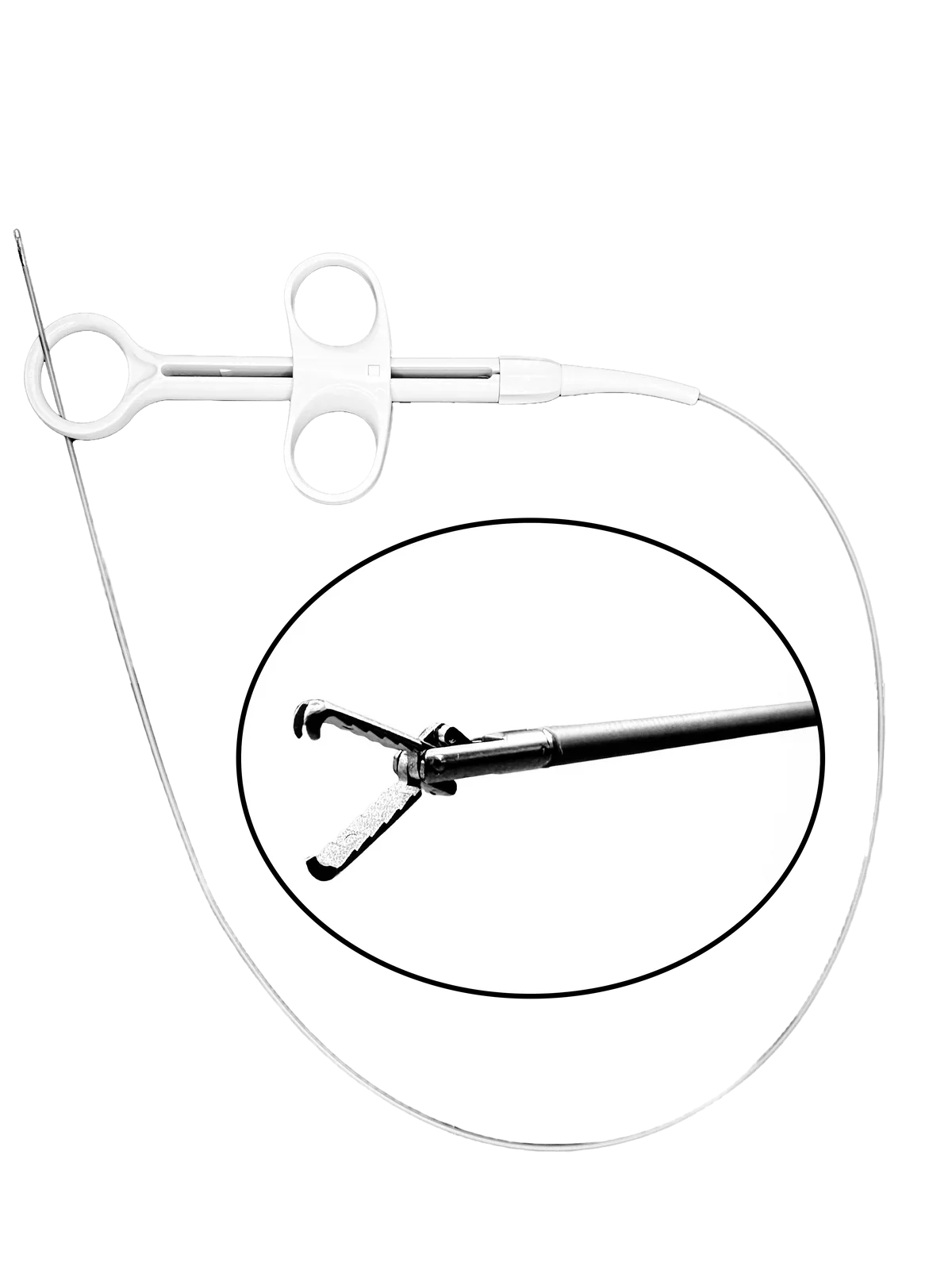
If you’ve ever performed a ureteroscopy or cystoscopy, you know how critical it is to pick the right forceps. Using the wrong instrument can slow your procedure, make tissue retrieval tricky, or even risk patient safety. Many clinicians struggle to decide: should I use flexible or semi-rigid forceps?
In this guide, we’ll break down the differences, benefits, and practical tips for using flexible vs semi-rigid forceps. You’ll also see evidence-based guidance from verified sources to help you make confident, safe, and efficient choices in your practice.
What Are Flexible and Semi-Rigid Forceps?
Forceps are essential tools in urology and endoscopy, used to grasp tissue, retrieve stones, or remove foreign objects.
-
Flexible Forceps: These bendable instruments are perfect for navigating curved or narrow anatomy, such as the ureter, renal pelvis, or pediatric urinary tracts.
-
Semi-Rigid Forceps: Slightly stiffer instruments that provide strong grip and precise control, ideal for larger stones or tissue in straight pathways.
Analogy: Think of a flexible forceps like a bendable straw able to reach tight corners safely while a semi-rigid forceps is like a spoon, perfect for scooping heavier objects without losing control.
Verified Source: American Urological Association – Ureteroscopy Guidelines
When to Use Flexible Forceps
Flexible forceps are your go-to when anatomy is complex or tissue is delicate.
Key Advantages
-
Navigate narrow or tortuous pathways
-
Minimize tissue trauma, especially in pediatric patients
-
Compatible with flexible endoscopes
Common Uses
-
Retrieving small or moderate ureteral stones
-
Performing upper urinary tract biopsies
-
Pediatric procedures requiring delicate manipulation
When to Use Semi-Rigid Forceps
Semi-rigid forceps are ideal for cases that require strength and precision in more accessible anatomy.
Key Advantages
-
Strong grip for larger stones or tissue
-
Provides tactile feedback for controlled retrieval
-
Compatible with rigid or semi-rigid scopes
Common Uses
-
Adult bladder stone removal
-
Foreign body extraction from urethra
-
Routine lower urinary tract biopsies
Practical Tip: Semi-rigid forceps allow firm control for larger stones, improving efficiency and patient safety.
Verified Source: Endourology Journal – Instrument Care & Handling
Top 10 Challenges Clinicians Face and How to Solve Them
1. Navigating Complex Anatomy
-
Solution: Use flexible forceps and pre-assess anatomy with imaging.
2. Insufficient Grip Strength
-
Solution: Switch to semi-rigid forceps for larger stones or tissue.
3. Scope Compatibility Issues
-
Solution: Verify instrument-scope compatibility before procedures.
4. Risk of Tissue Trauma
-
Solution: Flexible forceps for delicate areas; controlled, gentle manipulation.
5. Difficulty Grabbing Slippery Objects
-
Solution: Use forceps with serrated tips or adjust angle for secure grip.
6. Limited Visibility
-
Solution: Coordinate scope angulation and forceps entry; flexible tools reduce obstruction.
7. Instrument Maintenance
-
Solution: Follow cleaning and disinfection protocols; inspect for damage before use.
8. Prolonged Procedures
-
Solution: Prepare both forceps types for quick switching.
9. Learning Curve for New Clinicians
-
Solution: Hands-on practice, mentorship, and simulation training.
10. Inventory and Cost Management
-
Solution: Maintain versatile instruments for most procedures and track usage.
Comparison Table: Flexible vs Semi-Rigid Forceps
|
Feature |
Flexible Forceps |
Semi-Rigid Forceps |
|
Access |
Curved/narrow paths |
Straight paths |
|
Grip Strength |
Moderate |
Strong |
|
Best For |
Delicate tissue, pediatrics |
Large stones, firm tissue |
|
Scope Compatibility |
Flexible scopes |
Rigid/semi-rigid scopes |
|
Trauma Risk |
Low |
Moderate |
Actionable Tips for Clinicians
-
Assess anatomy and object size before choosing instruments.
-
Keep both flexible and semi-rigid forceps available.
-
Train regularly on instrument handling to improve efficiency and reduce errors.
-
Inspect and maintain instruments before every procedure.
-
Match instrument to patient: pediatric vs adult, delicate tissue vs firm stone.
Bottom Line
Choosing between flexible and semi-rigid forceps doesn’t have to be confusing. By understanding anatomy, tissue type, and object size, and keeping the right instruments on hand, you can streamline procedures, reduce risk, and improve patient outcomes.
CTA: Ready to upgrade your procedural toolkit? Explore our full range of flexible and semi-rigid forceps and ensure every procedure is safe, efficient, and precise.
➡️ Browse Products & Schedule a Consultation