
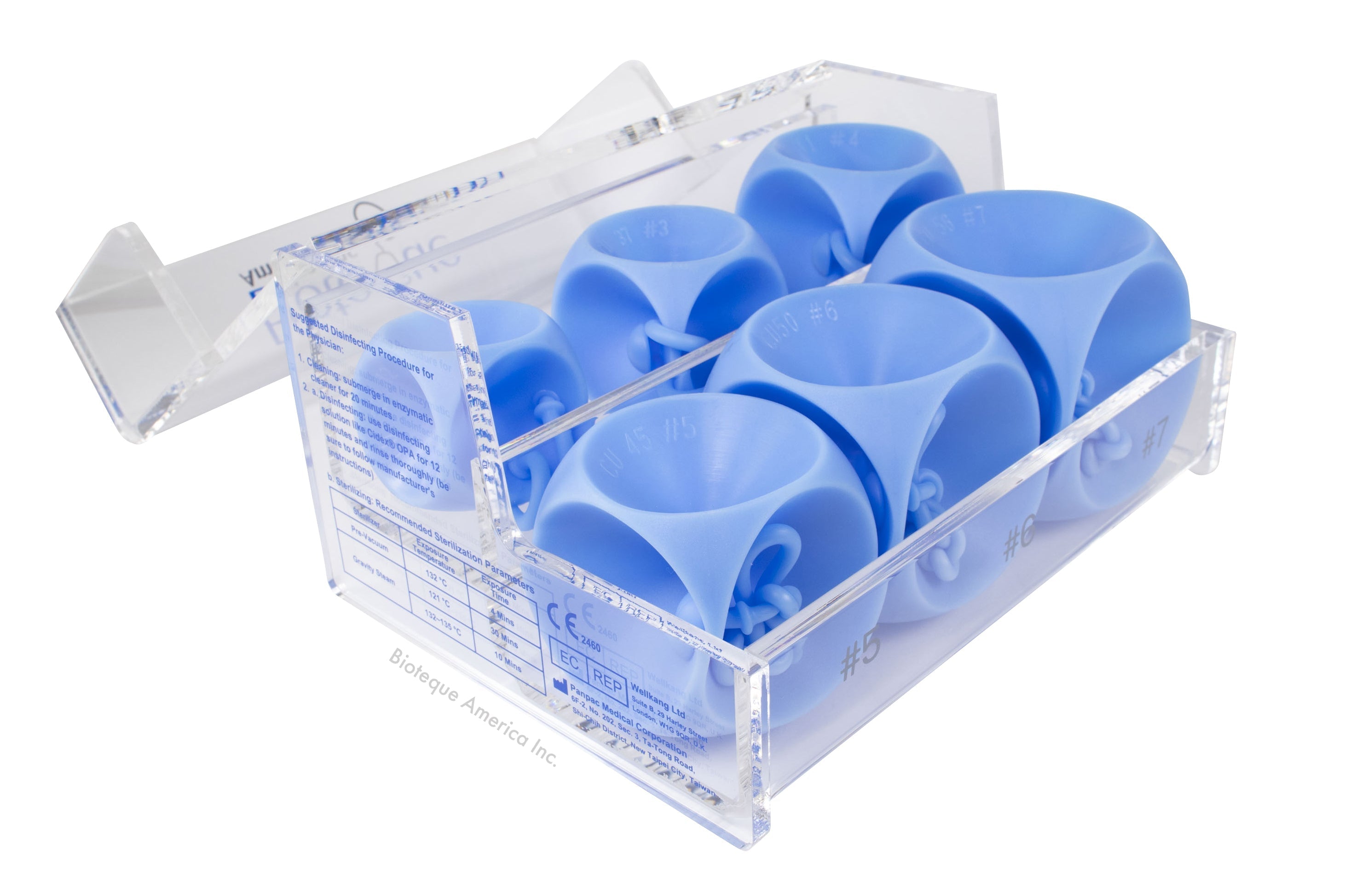
A pessary fitting service is one of the most accessible conservative-management offerings a gynecology or urogynecology practice can build. The capital investment is modest, the procedural skill set builds quickly, and the billing structure — CPT 57160 with no global days and predictable follow-up E/M revenue — rewards practices that formalize the service rather than fitting pessaries ad hoc. What separates a structured program from an occasional pessary placement is operational discipline: a stocked fitting kit assortment, trained medical assistants, a defensible reprocessing protocol, and scheduling templates that reflect how long fitting visits actually take.
This guide walks through every element of standing up or formalizing a pessary service in a gynecology clinic — from the business rationale and first-kit selection to step-by-step workflow, MA training scope, scheduling, and billing preparation.
In this guide:
- The business case: billable revenue and patient demand trends
- Which fitting kits to stock first, and in what order to expand
- Exam-room setup and supply checklist
- Medical assistant training — scope and limits
- Step-by-step fitting appointment workflow
- Scheduling templates and follow-up cadence
- Billing basics: CPT 57160, ICD-10, and HCPCS supply codes
- When to refer to urogynecology
The Business Case for Adding a Pessary Service
Conservative management is the guideline-endorsed first-line approach for pelvic organ prolapse (POP) in women who prefer to defer or avoid surgery. ACOG estimates that pelvic floor disorders affect approximately 1 in 4 U.S. women, with a lifetime risk of POP surgery approaching 12–19%. As the population ages and as evidence for conservative management strengthens, patient inquiries about pessaries are increasing across general OB/GYN, urogynecology, and women’s health NP practices.
The financial case is straightforward:
- CPT 57160 (fitting and insertion of pessary) carries zero global days, meaning it can be billed on the same date as an E/M service when documented separately
- HCPCS supply codes A4561 (rubber device) and A4562 (non-rubber/silicone device) allow separate billing for the pessary itself to the DMERC or via prescription to a pharmacy
- Follow-up visits every 3–12 months per AUGS guidance generate recurring E/M revenue at 99211–99215 depending on medical decision-making complexity
- Upfront capital required is low: fitting kit sets, lubricant, gloves, and an exam table — no dedicated procedure room required in most general gynecology settings
A practice fitting 5–10 new pessary patients per month will accumulate a follow-up panel that sustains appointment volume without additional acquisition cost. The administrative overhead is manageable once templates and MA protocols are in place.
Which Fitting Kits to Stock First
Clinicians cannot reliably predict which pessary shape a patient will retain before the fitting. A patient who fails to retain a ring on the first attempt may succeed with a ring-with-support or advance to a space-filling shape. Stocking only one shape creates a bottleneck at the fitting visit and increases the likelihood of scheduling a second appointment. The evidence base supports this: the Bugge et al. Cochrane systematic review (2020) found no single pessary shape superior for all patients, reinforcing the need for a multi-shape assortment.
A practical build-out sequence for new services:
| Fitting Kit | Primary Indication | When to Add | Notes |
|---|---|---|---|
| Ring Fitting Set | Support POP, cystocele, basic apical descent | Day one | Most common first-choice shape; silicone, autoclavable |
| Ring with Knob Fitting Set | Concurrent SUI + POP | Day one alongside Ring | Knob compresses urethra at symphysis; avoids separate device |
| Gellhorn Fitting Set | Advanced-stage POP, apical prolapse | High-volume or urogyn practice | Space-filling; requires clinician for removal in most patients |
| Cube Fitting Set | Severe vault prolapse, post-hysterectomy | Add for complex caseload | Space-filling via suction; daily removal recommended |
| Dish Fitting Set | Mild–moderate POP with or without SUI | Optional; expands breadth | Lower-profile alternative to ring family |
A Ring plus Ring-with-Knob plus Gellhorn assortment covers the majority of first-fitting scenarios in most general gynecology practices.
Browse the full pessary fitting sets collection to review available SKUs, size ranges, and add-on kits as your service volume grows.
Exam-Room Setup and Supply Checklist
A dedicated pessary tray or cart is preferable to sharing a general supply cabinet. Dedicated setup reduces the risk of reprocessing errors, keeps IFU logs co-located with the kits, and shortens MA room-prep time. The room itself does not need to be a procedure room — a standard exam room with an adjustable table and adequate lighting meets minimum requirements.
Minimum setup checklist:
- 3–5 fitting kit shapes (stocked per the sequence above)
- Pessary Assistant tool — for MA-assisted removal at follow-up visits and patient self-management training
- Water-based lubricant (non-oil-based — oil-based products degrade silicone over time)
- Sterile gloves in multiple sizes
- Procedure lighting (ring light or ceiling-mounted preferred over standard exam room overhead)
- Patient education cards — insertion/removal reference, hygiene and reporting card, follow-up schedule
- Reprocessing log sheet with columns for date, kit shape/size, method, operator initials, and biological indicator result if applicable
- Biohazard disposal container for single-use items
Label each kit tray with the shape and size range. When a pessary in the kit develops discoloration, cracking, or loss of firmness, retire it immediately and document the retirement in the log. Bioteque silicone kits are autoclavable and non-latex — properties that simplify reprocessing and address allergy screening concerns in a single material choice.
Medical Assistant Training — Scope and Responsibilities
Defining MA scope clearly before launching a pessary service prevents both under-utilization of staff and scope creep. The fitting and sizing of a pessary is a clinician-only function — it requires pelvic examination findings, clinical judgment about shape selection, and the ability to assess patient retention. MAs do not perform fittings, do not modify shape or size selections, and do not make clinical recommendations to patients about their pessary type.
MA responsibilities in a pessary service include:
- Room setup: tray assembly, kit retrieval, lubricant and glove stocking
- Patient education card distribution and verbal orientation (not clinical instruction)
- Kit reprocessing after each fitting: wash, disinfect per protocol, log, re-tray
- Reprocessing log maintenance — date, method, operator initials, any anomalies noted
- Retirement flagging: inspect kits at each reprocessing cycle and pull pessaries showing wear
- Restocking requests to supply coordinator when kit inventory falls below par
- Demonstrating the Pessary Assistant insertion and removal technique on a model for patient education purposes — under clinician direction and after documented training
MA training topics to document:
- Pessary kit reprocessing protocol specific to your clinic (autoclave vs. chemical high-level disinfection)
- OSHA standard precautions for handling used devices (semi-critical device classification per CDC Spaulding)
- Pessary Assistant device mechanics — how the placement side and hook side work, which pessary shapes are compatible, and which are not (Gellhorn, Cube, Donut are not compatible with the Pessary Assistant)
- When to escalate to the clinician: patient reports of inability to remove, discharge, bleeding, odor, or discomfort at any point after fitting
Documenting MA training in a competency checklist — with date, trainer name, and skill verified — supports both quality assurance and compliance in the event of an inspection or audit.
The Fitting Appointment — Step-by-Step Workflow
A structured workflow for the fitting appointment reduces chair time, improves documentation consistency, and increases the probability of a successful first fit.
Pre-visit chart review (MA or clinician):
- Confirm indication: POP-Q stage if documented, SUI history, prior pessary use and outcomes
- Screen for latex allergy — flag if positive; silicone kits are latex-free
- Confirm no active vaginal infection (pessary fitting should be deferred until treated)
Fitting sequence (clinician):
- Position patient in dorsal lithotomy; perform pelvic exam to assess vaginal caliber, depth, and perineal body tone
- Begin with ring or ring-with-support — support pessaries are the appropriate first-line trial for most cystocele or mild apical prolapse presentations
- If ring fails to be retained with Valsalva or ambulation, advance to a space-filling shape (Gellhorn for apical/uterine prolapse; Cube for severe vault prolapse)
- For concurrent SUI, trial the ring-with-knob or dish-with-knob as the initial support shape
Post-insertion assessment (clinician with MA):
- Have patient ambulate in the hallway for 5–10 minutes
- Perform a cough-stress test with the patient standing
- Confirm comfort: patient should not feel the pessary with normal activity
- If retention is adequate and patient is comfortable, proceed to documentation and education
Visit documentation:
- Shape and size fitted
- Retention result (retained through ambulation and Valsalva, or not)
- Patient tolerance and any discomfort noted
- Education provided (Pessary Assistant instruction, hygiene card, follow-up schedule given)
- Follow-up plan with rationale for cadence chosen
Scheduling — How to Structure Follow-Up
Scheduling templates that do not reflect actual visit length create chronic overbooking, which in turn erodes compliance and patient satisfaction. Use the following as a baseline and adjust for your patient population and staffing model:
- Initial fitting appointment: 20–30 minutes. Allow 30 minutes for complex presentations (advanced-stage POP, multiple failed prior shapes, significant atrophic vaginitis)
- First follow-up: 2–4 weeks post-fitting, 10–15 minutes — confirm retention, inspect for erosion or discharge, reinforce self-management if applicable
- Routine maintenance: Every 3–12 months per ACOG and AUGS guidance, calibrated to the patient’s ability to self-manage. Patients who have demonstrated self-insertion and removal competency can be scheduled annually; patients who rely on clinician-assisted removal require every 3-month intervals
- High-risk follow-up schedule (every 3 months): Advanced age, atrophic vaginitis, prior erosion history, impaired dexterity preventing self-management, space-filling pessary users (Gellhorn, Cube)
Any patient reporting an inability to remove the pessary, abnormal discharge, bleeding, odor, or pain should be seen promptly regardless of scheduled follow-up interval. These presentations warrant clinical reassessment and should not be managed over the phone without examination.
Billing Basics for the Pessary Fitting Visit
Pessary fitting has a well-established coding pathway. A brief orientation for your billing team before launch will prevent denied claims on the first batch of submissions.
Procedural code:
- CPT 57160 — Fitting and insertion of pessary or other intravaginal support device. Zero global days. Can be billed on the same date as a separately documented evaluation and management (E/M) service. Append modifier -25 to the E/M code when billing both on the same date
ICD-10 diagnosis codes for the pessary visit:
- N81.x — Female genital prolapse (specify subtype: N81.2 incomplete uterovaginal prolapse, N81.3 complete uterovaginal prolapse, N81.10 cystocele, etc.)
- N39.3 — Stress incontinence (female)
- N39.46 — Mixed incontinence (stress and urge)
DMERC supply codes (billed separately for the device itself):
- HCPCS A4561 — Pessary, rubber, any type (PVC material)
- HCPCS A4562 — Pessary, non-rubber, any type (silicone — applies to Bioteque and most Milex silicone devices)
Follow-up visit coding:
- Pessary cleaning, reinspection, and reinsertion visits code as E/M services (99211–99215) based on medical decision-making complexity, with documentation supporting the level billed
- If the pessary is refitted to a different shape or size at a follow-up visit, CPT 57160 may be billed again with documentation of the change
Check the CMS Physician Fee Schedule for current national and locality-adjusted payment rates for CPT 57160. Rates vary by geography and payer; do not publish specific dollar amounts internally without verifying against the current fee schedule. For a detailed coding walkthrough, see the pessary CPT coding guide in this series.
When to Refer to Urogynecology
A well-run general gynecology pessary service will successfully manage the majority of patients presenting with symptomatic POP and SUI. Referral criteria should be documented in your clinic protocol and communicated to patients before initiating the fitting attempt:
- Fitting failure after 2–3 trials across multiple shapes (ring, ring-with-support, and at least one space-filling device)
- POP-Q Stage 4 prolapse with no shape retained — advanced-fitting techniques and urogynecology expertise may identify a viable option
- Complex SUI + POP requiring evaluation for surgical mesh, reconstructive repair, or urodynamic workup
- Recurrent erosion, ulceration, or persistent vaginal discharge despite management adjustments
- Pessary use during pregnancy (e.g., cervical insufficiency management) — out of scope for standard gynecology pessary services; refer to MFM or urogynecology
For the full fitting kit lineup — including the Ring, Ring with Knob, Ring with Support, Gellhorn, Cube, Dish, Marland, Oval, and FlexiShelf kits — see Minerva’s pessary fitting sets collection. Building out a service with the right assortment from the start reduces the likelihood of a fitting failure driven by kit gaps rather than patient anatomy.
Frequently Asked Questions
How many fitting kits does a new pessary service need to stock?
A minimum viable assortment for a new service is three shapes: Ring, Ring with Knob, and Gellhorn. These three kits cover support POP, concurrent SUI, and advanced-stage or apical prolapse — the most common clinical scenarios encountered in a general gynecology practice. Adding a Cube kit expands coverage for severe vault prolapse and post-hysterectomy descent. A five-kit assortment (Ring, Ring with Knob, Gellhorn, Cube, and Dish) supports a higher-complexity caseload and reduces the need for referral at the first fitting appointment.
Can a medical assistant perform pessary fittings under physician supervision?
No. Pessary fitting requires pelvic examination findings and clinical judgment to select shape and size, assess vaginal caliber and depth, and evaluate retention. This is a physician or advanced practice clinician function. MAs support the fitting service through room setup, patient education card distribution, device reprocessing, and supply management — but do not perform fittings, make sizing decisions, or advise patients on shape selection. State scope of practice rules apply and should be reviewed for any delegated clinical tasks.
How long does the initial pessary fitting appointment typically take?
Schedule 20–30 minutes for an initial fitting. Complex presentations — advanced-stage prolapse, multiple failed shapes, significant atrophic vaginitis, or first-time patients requiring detailed education — benefit from a 30-minute block. First follow-up visits (2–4 weeks post-fitting) typically run 10–15 minutes. Routine maintenance visits every 3–12 months run 10–15 minutes for patients who can self-manage and 15–20 minutes for clinician-assisted removal and reinsertion. Using appointment types with built-in time buffers is recommended for the first 6 months of a new service while template patterns are calibrated.
What ICD-10 codes should be used for pessary fitting visits?
The primary diagnosis should reflect the condition being managed: N81.x for female genital prolapse subtypes (N81.10 for cystocele, N81.2 for incomplete uterovaginal prolapse, N81.3 for complete, etc.), N39.3 for stress urinary incontinence, or N39.46 for mixed incontinence. Code specificity at the most granular ICD-10 level supported by documentation. Submit the most specific subcode available — unspecified codes (N81.9) increase the risk of a claim being queried for additional documentation.
This article is for informational purposes for healthcare professionals. It does not constitute medical advice or replace clinical judgment. Always follow your institution’s protocols and the manufacturer’s instructions for use.