
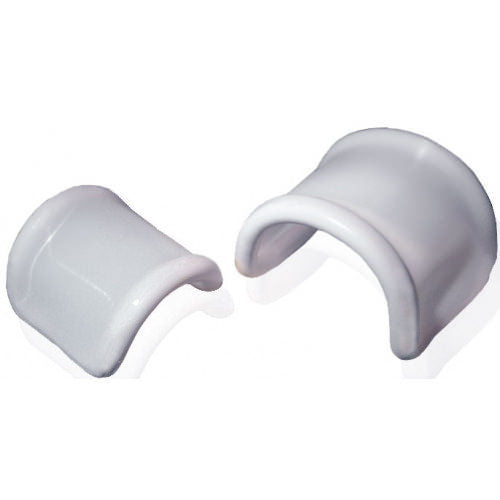
Pelvic organ prolapse (POP) is among the most prevalent conditions a urogynecologist or OB/GYN will manage, and treatment decisions resist algorithmic simplicity. Surgery aims to correct anatomy; a pessary supports it. Neither is universally superior. For the clinician counseling a patient, the challenge is presenting both pathways accurately, eliciting what the patient values most, and documenting a joint decision. This post provides a structured shared decision-making (SDM) framework for that conversation, drawing on ACOG practice guidance and AUGS patient education resources. For a comprehensive overview of pessary selection by POP-Q stage and compartment, see our full clinical guide to pessaries for pelvic organ prolapse.
The Clinical Stakes: Why This Decision Matters
Approximately 13% of women with POP will undergo surgical repair in their lifetime, and reoperation rates for recurrent prolapse reach 10–29% over 10 years. Surgical outcomes at one year are robust—objective anatomical success of 70–90% across native tissue and mesh-augmented techniques—but they erode with longer follow-up. Pessary management achieves symptom resolution in 70–90% of successfully fitted patients, with continuation rates of roughly 60–70% at one year.
ACOG explicitly endorses offering a pessary as an alternative to surgery at any POP stage—not as a default surgical bridge, but as a valid, definitive management strategy. The clinician’s role is to present this accurately and document a shared decision.
What Surgery Offers—and What It Does Not
Surgical repair addresses the structural defect. Native tissue options include anterior colporrhaphy, posterior colporrhaphy, sacrospinous ligament fixation, and uterosacral ligament suspension for apical prolapse. Abdominal sacrocolpopexy (typically laparoscopic or robotic) is the reference standard for apical suspension with the most durable long-term anatomical outcomes. Key points to convey to the patient:
- Surgery aims for anatomical restoration; symptom relief follows in most cases but is not guaranteed for every complaint, particularly bowel or bladder symptoms unrelated to prolapse mechanics.
- Reoperation for recurrence is a real possibility—not rare—and patients should understand this before consenting.
- Recovery requires 6–8 weeks of activity restriction; patients with caregiving responsibilities or physically demanding work should plan accordingly.
- Surgical risk compounds with comorbidities: cardiac disease, anticoagulation, BMI > 40, and frailty may shift the risk–benefit calculation toward conservative management regardless of prolapse stage.
What a Pessary Offers—Evidence and Realistic Expectations
A pessary does not repair the defect. It supports prolapsed tissue in place, relieving the bulge, pressure, and voiding or defecatory difficulty that patients identify as most bothersome. The Cochrane 2020 review (Bugge et al.) found pessary combined with pelvic floor muscle training (PFMT) probably improves POP symptoms and quality of life versus PFMT alone (moderate-certainty evidence). The PESSRI trial demonstrated clinically significant improvements in PFDI and PFIQ scores with both ring-with-support and Gellhorn devices. Realistic framing for the patient conversation:
- First-attempt fitting succeeds in approximately 56–73% of patients; a structured fitting approach reduces unnecessary trial-and-error.
- Continuation at one year is approximately 60–70%; long-term attrition is significant (one cohort reported 14% at 14 years), reflecting disease progression and life-circumstance change.
- Ongoing follow-up every 3–12 months is required per ACOG and AUGS guidance. Some patients self-manage after instruction.
- A pessary manages symptoms—it does not cure prolapse. Patients who achieve good symptom control may elect to continue indefinitely; that is a clinically appropriate long-term strategy.
Ring with support pessaries are the most common first-line option for anterior and mild apical prolapse. Space-filling pessaries for moderate-to-severe prolapse such as the Gellhorn are indicated when the ring family fails or GH exceeds 4 cm. The full range is available through Minerva’s Prolapse Solutions collection.
Pessary vs. Surgery: Side-by-Side Counseling Reference
The table below is a clinical counseling reference—not a recommendation tool. Every patient weighs these dimensions differently.
| Dimension | Pessary (+ PFMT) | Surgical Repair |
|---|---|---|
| Mechanism | Symptom management; supports pelvic organs without correcting defect | Anatomical restoration; repairs the structural defect |
| Symptom success | 70–90% of fitted patients report meaningful improvement | 70–90% objective success at 1 year; declines over time |
| Long-term durability | ~14% continuation at 14 years (one cohort); attrition as disease progresses | Reoperation rate 10–29% at 10 years depending on procedure |
| Recovery burden | None after fitting; clinic visits every 3–12 months | 6–8 weeks activity restriction; anesthesia and hospitalization |
| Risk profile | Vaginal erosion, discharge, UTI; very low serious complication rate | Infection, hemorrhage, organ injury, dyspareunia, mesh complications (augmented) |
| Sexual activity | Ring with support: compatible; Gellhorn/Cube/Donut: typically removed before intercourse | Resume after recovery; dyspareunia risk varies by procedure |
| Future fertility | Compatible; pessary does not preclude pregnancy | Hysterectomy precludes pregnancy; hysteropexy preserves uterus |
| Cost | Substantially lower cumulative cost vs. surgical episode with potential reoperation | Higher upfront cost; reoperation adds significant additional expense |
| ACOG/AUGS position | Valid alternative to surgery at all POP stages; appropriate as long-term management | Indicated for patients seeking anatomical correction with acceptable surgical risk |
Takeaway: Pessary and surgery achieve comparable near-term symptom success rates; the clinically meaningful differences are recovery burden, long-term durability patterns, risk profile, and the patient’s willingness to engage in ongoing device management—factors only the patient can weigh.
Clinical Decision Pathways: When to Lead with Each Option
Lead with conservative management (pessary + PFMT) when any of the following apply: patient preference for non-surgical care; elevated surgical risk (cardiac disease, anticoagulation, BMI > 40, frailty); desire for future pregnancy; surgical waitlist; postpartum or perimenopausal status where spontaneous improvement with pelvic floor rehabilitation is plausible; vaginal mucosal ulceration requiring healing (typically 4–6 weeks topical estrogen) before surgery is safe; or a patient testing symptom response before committing to a procedure.
Lead with surgical counseling when: the patient has a strong, informed preference for anatomical correction; there is a concurrent surgical indication (uterine pathology requiring hysterectomy, ureteral obstruction, progressive hydronephrosis); Stage IV procidentia with mucosal compromise in a medically fit patient; or documented failure of systematic pessary trials across multiple shapes and sizes despite adequate fitting effort.
Pessary as deliberate bridge to surgery is a distinct third pathway: pessary reduces prolapse burden to allow mucosal healing before repair, supports the patient during a weight-reduction program that will lower perioperative risk, or allows an occult stress incontinence assessment (6–8 weeks pessary trial to unmask SUI before planning a combined repair). This is not the same as first-line conservative management; document the rationale explicitly. For the fitting workflow when initiating bridge therapy, consult the pessary sizing and fitting guide in this pillar series.
Shared Decision-Making: Language and Documentation
A structured SDM encounter follows five steps: (1) elicit patient priorities—“What bothers you most about your prolapse? What does successful treatment look like for you?”—before presenting options; (2) describe both options with balanced language, neither framing pessary as “just temporary” nor overpromising surgical durability; (3) explore values explicitly: attitude toward surgery, recovery time, ongoing clinic visits, sexual activity, fertility, and cost; (4) provide take-home materials—IUGA patient resources on pessary use in POP and AUGS patient education materials are appropriate; (5) document the encounter note with options discussed, the patient’s stated preference and reasoning, decision aids provided, and the agreed management plan with follow-up schedule. ACOG requires documentation of informed consent for both surgical and non-surgical POP management decisions. This documentation also supports continuity of care if the patient transfers to another provider. For ASC settings, this aligns with urology and gynecology ASC documentation requirements.
Frequently Asked Questions
Is a pessary as effective as surgery for pelvic organ prolapse?
Both achieve meaningful symptom improvement in the majority of patients in the near term, roughly 70–90% for each modality. The meaningful differences are recovery burden, long-term durability (reoperation rates for surgery; attrition for pessary), and ongoing management requirements. No well-powered RCT has directly compared the two for quality-of-life outcomes at five or more years.
When is surgery preferred over a pessary for prolapse?
Surgery is the appropriate primary discussion when the patient has a strong informed preference for anatomical correction, a concurrent surgical indication (uterine pathology, ureteral obstruction, hydronephrosis), Stage IV procidentia with mucosal compromise in a medically fit patient, or documented failure of systematic pessary trials.
Can a patient switch from pessary to surgery later?
Yes. Pessary use does not preclude subsequent surgical repair and may benefit it—a period of pessary management can resolve mucosal changes and allow surgery to proceed on healthier tissue. Clinicians should communicate this flexibility explicitly so patients understand they are not making an irrevocable choice.
What should I tell a patient who wants to avoid surgery for prolapse?
Frame pessary as a valid, evidence-supported long-term management strategy—not a compromise. Set accurate expectations: fitting may require more than one attempt, follow-up every 3–12 months is required, and prolapse may eventually progress to the point where surgery becomes the preferred option. Pair pessary with a supervised pelvic floor muscle training program for additive benefit per Cochrane 2020 evidence, and document the patient’s informed choice.
Does pessary use affect surgical outcomes if the patient later elects repair?
Evidence on this specific question is limited. Pessary use to heal mucosal ulceration before surgery is well-established and associated with better tissue quality at operation. There is no strong evidence that pessary use worsens subsequent surgical outcomes. This is a reassuring point for patients who want to preserve their surgical option while managing symptoms conservatively.
This article is for informational purposes for healthcare professionals. It does not constitute medical advice or replace clinical judgment. Always follow your institution’s protocols and the manufacturer’s instructions for use.