
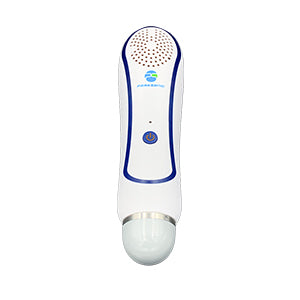
Primary care and internal medicine physicians manage urinary symptoms every day — patients with benign prostatic hyperplasia (BPH), lower urinary tract symptoms (LUTS), overflow incontinence, and medication-induced retention who arrive without objective bladder data. An in-office, FDA 510(k)-cleared bladder scanner closes that gap: a handheld device provides rapid, non-invasive post-void residual (PVR) measurement at the point of care, informing the decision to treat, monitor, or refer. For the specialist perspective, see the companion article on bladder scanners for urology and urogynecology offices (p1c3); for long-term care settings, see bladder scanners for nursing homes and LTC (p1c5).
Why Primary Care Practices Are Adding Bladder Scanners
The AUA guidelines on BPH and LUTS identify post-void residual measurement as a standard component of the initial evaluation. Yet most primary care offices historically have sent patients elsewhere to get that number, generating a referral that costs time and returns days later with a single data point the office could have captured in two minutes.
An in-office bladder scanner allows the primary care physician or nurse practitioner to:
- Distinguish storage dysfunction (urgency, frequency) from voiding dysfunction (obstruction, incomplete emptying) using objective volume data
- Quantify incomplete emptying to calibrate the urgency of urology referral
- Document a measured PVR in the referral note, expediting specialist triage
- Bill CPT 51798 (non-imaging ultrasound bladder volume measurement) as a separately reimbursable in-office service
The ROI argument is straightforward: fewer unnecessary referrals for patients whose PVR is reassuringly low, and faster escalation when the result signals significant retention.
Clinical Indications in the Primary Care Setting
According to StatPearls — Bladder Post Void Residual Volume, PVR thresholds inform watchful waiting versus intervention decisions across symptomatic and asymptomatic patients alike. Key primary care indications include:
- BPH / LUTS triage: Quantify PVR before initiating alpha-blocker therapy, selecting watchful waiting, or referring to urology. A significantly elevated PVR changes management.
- Urinary retention workup: Patients presenting with hesitancy, weak stream, or a sensation of incomplete emptying benefit from a PVR as a non-invasive first step. A PVR below 50 mL generally reflects adequate emptying; above 200 mL warrants closer evaluation or specialist referral.
- Geriatric overflow incontinence: Overflow incontinence in elderly male patients with BPH can mimic urgency incontinence. A scan revealing elevated pre-void or post-void volumes helps differentiate the mechanism and avoids inappropriate antimuscarinic prescribing in a patient who is already retaining.
- Medication-induced retention monitoring: Patients on antimuscarinics, opioids, tricyclic antidepressants, or antihistamines may develop incomplete emptying. Serial PVR measurements provide objective tracking without repeated catheterization.
- Pre-referral documentation: A documented PVR adds clinical substance to the specialist referral note and typically shortens triage time at the urology office.
Bladder scanner volume estimates inform clinical decisions — they do not replace catheterization, diagnostic imaging, or physician assessment when the clinical picture warrants those interventions.
Practical Workflow for a Busy Primary Care Office
Primary care settings differ from urology practices in procedural volume, staff scope, and procedure time. A PVR workflow adapted for primary care keeps the scan from becoming a bottleneck:
- Patient voids immediately before the encounter — instruct at check-in; note the void time on the chart.
- Nurse or MA scans during rooming — handheld scanner in the exam room; typical scan time under two minutes including documentation.
- Result posted to chart before the physician enters — PVR is available alongside the symptom score (AUA-SI or IPSS) at the start of the encounter.
- Physician documents clinical interpretation — the scanner provides a volume estimate; interpretation and the management decision remain the physician’s responsibility.
- Decision point: initiate treatment, watchful waiting with follow-up PVR, or refer to urology with the documented PVR included in the referral letter.
Training for handheld bladder scanners is brief — most operators reach competency in under 30 minutes. Probe disinfection between patients follows Spaulding classification for non-critical surfaces; follow your facility’s infection control policy and the manufacturer’s IFU.
Scanner Selection: Minerva SKUs for Primary Care Budgets
Primary care practices typically run lower PVR volumes than urology offices. A single handheld device is usually sufficient for a two-to-five provider practice, and portability between exam rooms is an advantage over cart-based systems. Three Minerva SKUs span the entry-to-mid-tier range suited to primary care:
| Model | Best fit | Primary care position |
|---|---|---|
| HD2 | Budget-first or lowest-volume practices | Entry-level point-of-care PVR; cost-effective starting point for practices new to in-office scanning |
| HD3 | Office / clinic (most primary care practices) | Higher-resolution display; recommended step-up from the HD2 for practices scanning routinely |
| M4 | Mid-tier; higher-volume or multi-site practices | Enhanced display and mid-tier feature set; well positioned for internists who scan frequently across multiple visit types |
For most primary care practices, the Caresono HD3 or MDPro M4 provides a practical and cost-effective in-office PVR capability; the HD2 or M2 offer entry-level options for lower-volume or budget-first settings.
Explore the full range at the Minerva bladder scanner collection. Higher-tier devices (M5, M7) are positioned for ASC, hospital, and high-volume specialty use — their feature sets exceed what most primary care volumes require. For how this setting fits into the broader care-setting landscape, see the Bladder Scanners by Care Setting hub (Pillar 1).
Accuracy Caveats in Primary Care Populations
Primary care panels typically include a higher proportion of patients with obesity than specialty practices. A 2025 study (PubMed 40633286) confirms that bladder scanner accuracy degrades at BMI > 30: abdominal wall tissue attenuates the ultrasound signal and can cause volume overestimation or underestimation. Additional caveats:
- Female patients with pelvic pathology: Uterine fibroids, ovarian cysts, or other pelvic masses can be misidentified as the bladder or distort the volume calculation. Clinical judgment should prevail when the result is inconsistent with symptoms.
- Abdominal pathology in elderly patients: Vascular structures or abdominal distension can interfere with volume estimation.
- Positioning: Patients should be supine per the manufacturer’s IFU; scanning in non-standard positions reduces accuracy.
Document the result as an estimate that informs the clinical decision — not as a definitive measurement. When precision matters, a catheter PVR remains the standard.
Reimbursement Context — CPT 51798 in the Physician Office
CPT 51798 covers non-imaging ultrasound measurement of bladder capacity. In a physician office (non-facility) setting it is separately billable when performed as a clinically indicated, standalone service. Per CMS Billing & Coding Article 57050, the service requires documentation of the clinical indication, the measured result, and the clinician’s interpretation.
When CPT 51798 is performed during the same encounter as an E/M visit, modifier 25 on the E/M (or modifier 59 on 51798) may be required to establish the service as separately identifiable — verify current pairing rules with your billing team. Check the CMS Physician Fee Schedule search tool for the current non-facility rate in your locality; specific dollar amounts change annually. The full billing workflow — including documentation templates and private-payer considerations — is covered in the CPT 51798 reimbursement guide (p3c3). For the BPH and LUTS clinical framework that contextualizes in-office PVR scanning, see the BPH workup and bladder scanning cluster (p2c9).
Frequently Asked Questions
When should a primary care physician refer to urology rather than managing BPH in-house?
A PVR above 200–300 mL, an IPSS score of 20 or higher, or lack of response to initial alpha-blocker therapy are common referral thresholds. Patients with upper tract involvement — elevated creatinine, hydronephrosis, or recurrent UTIs — warrant earlier specialist involvement. Include the documented bladder scan PVR and void time in the referral note; it materially assists the urologist’s triage.
Can a medical assistant perform bladder scans in a primary care office?
Yes. Medical assistants can be trained to operate FDA 510(k)-cleared handheld bladder scanners under physician supervision; onboarding for most devices takes under 30 minutes. Clinical interpretation and the management decision remain the physician’s responsibility. Verify state scope-of-practice regulations and your practice’s credentialing policies.
Is CPT 51798 worth adding to a primary care practice?
For practices that regularly evaluate BPH, LUTS, or geriatric overflow incontinence, in-office PVR scanning can offset its cost through billable service revenue and avoided unnecessary referrals. The documentation burden is minimal. Consult your billing team and the current CMS Physician Fee Schedule for your locality to model the ROI before purchasing.
What is a normal PVR for an adult male with BPH symptoms?
A PVR below 50 mL is generally considered to reflect adequate emptying. A result between 50 and 200 mL falls in a gray zone requiring clinical context: symptom severity, medication history, and trend over time. Above 200 mL is generally considered significantly elevated. No universally agreed-upon threshold exists — AUA guidelines and institutional protocol should guide management decisions.
Does a handheld bladder scanner require calibration or ongoing maintenance?
Most FDA 510(k)-cleared handheld devices require minimal maintenance: routine battery charging, probe disinfection per Spaulding classification, and manufacturer-recommended service intervals per the IFU. There is no patient-specific calibration step. Maintain a log of probe disinfection and any device issues per your quality program.
This article is for informational purposes for healthcare professionals. It does not constitute medical advice or replace clinical judgment. Always follow your institution’s protocols and the manufacturer’s instructions for use. Bladder scanner volume estimates inform clinical decisions but do not replace catheterization, diagnostic imaging, or physician assessment.