
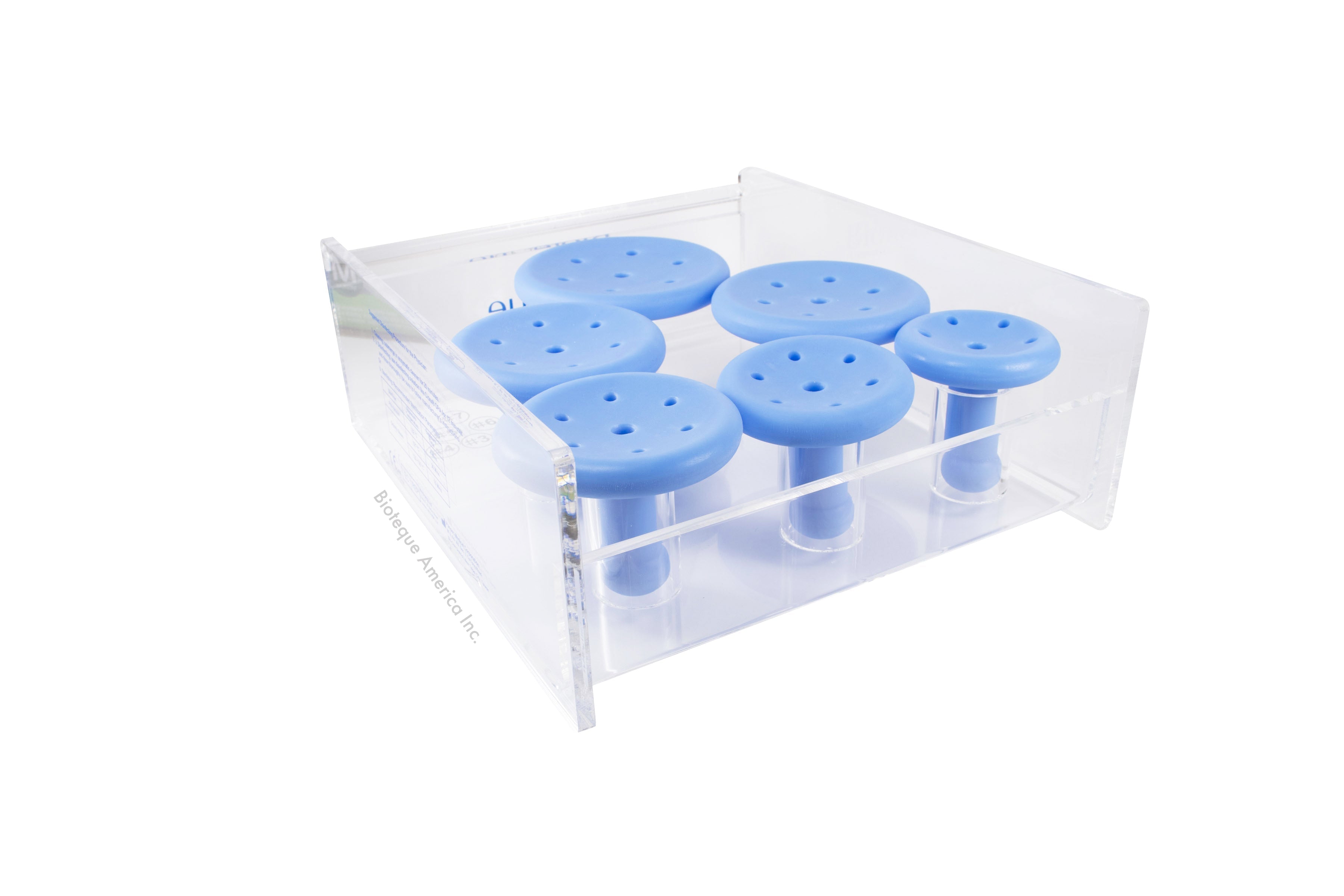
Insertion technique determines whether a pessary fitting succeeds. The correct shape and size may be confirmed, yet a poorly executed insertion results in a pessary that expels on Valsalva, causes discomfort, or occludes the urethra. This guide covers procedural steps for the full shape range: ring, ring with support, ring with knob, dish, donut, Gellhorn, cube, Hodge, and Gehrung — written for the clinician performing the procedure.
This post assumes the fitting assessment is complete. For sizing guidance, see the pessary sizing and fitting workflow and the pessary shape-by-shape decision guide. A vaginal pessary must be fitted by a trained clinician; no remote or self-selection protocol is appropriate.
Before Insertion — Setup and Safety Check
Have at the bedside: water-based lubricant, gloves, adequate procedure lighting, a Graves or Pederson speculum on standby, and PVR assessment capability. Position the patient in dorsal lithotomy; instruct her to void immediately beforehand.
Before inserting any pessary, confirm: no active vaginal or pelvic infection; no unhealed ulceration or erosion from a prior pessary; no undiagnosed vaginal bleeding. Most Bioteque and Milex shapes available through Minerva are medical-grade silicone — confirm latex allergy status when relevant.
Inserting a Ring Pessary (With and Without Support)
The ring is the standard first-line technique and the foundation for all other support pessary insertions.
- Lubricate the outer surface with water-based lubricant.
- Fold the ring by compressing at the 3 and 9 o’clock positions. It should spring back immediately when released; failure to do so indicates the device needs replacement.
- Introduce at 45° toward the posterior vaginal fornix. Advance steadily without forcing.
- Release and seat. Guide the posterior edge into the posterior fornix; the anterior edge rests behind the pubic symphysis.
- Verify fit. A single finger should pass freely between the ring and the vaginal wall in all quadrants. If it does not, the ring is oversized — replace with the next size down. The patient should report no pressure or foreign-body sensation at rest.
Ring with Support: Identical technique. After seating, confirm the central support membrane lies along the anterior vaginal wall and is not inverted.
For self-managing patients, this is the technique to teach in the clinical setting. Confirm independent insertion and removal ability before discharging to home care. First follow-up: within 4 weeks per the AUGS-SUNA 2023 Clinical Consensus Statement. See Minerva’s Ring Pessary and pessary fitting set collection.
Inserting a Ring with Knob Pessary
The ring with knob is an incontinence variant: the knob must be at 12 o’clock (anterior, toward the symphysis) to achieve urethral compression for SUI.
- Fold and insert with the knob oriented posteriorly to ease passage through the introitus.
- Once seated, rotate the ring so the knob is at 12 o’clock — pressing against the posterior surface of the symphysis.
- Confirm knob position by palpation through the anterior vaginal wall at the urethral level.
- Ask the patient to cough and perform Valsalva while standing. Reposition if no SUI improvement.
Incorrect knob placement — lateral, posterior, or absent from the symphysis contact zone — is the most common technical failure point for this shape. See Minerva’s Ring with Knob Pessary.
Inserting a Gellhorn Pessary
The Gellhorn is the standard space-filling escalation for moderate-to-advanced prolapse when ring-family pessaries fail. Insertion typically requires a clinician.
- Apply lubricant to the disc and stem.
- Hold the stem and introduce the disc edge-first at 45° toward the posterior wall. A face-first approach will not pass the introitus.
- Once past the introitus, tilt the disc to near-horizontal so the stem points toward the introitus.
- Advance into the posterior fornix. A gentle suction will confirm disc-wall contact.
- Confirm the stem is accessible within 1–2 cm of the introitus. A deeply retracted stem signals an oversized disc — consider a long-stem variant.
- Perform Valsalva testing while standing; obtain PVR after voiding.
The PESSRI randomized crossover trial found ring with support and Gellhorn produced equivalent symptom relief for most prolapse indications, supporting staged escalation rather than first-line Gellhorn use (Cundiff GW et al., 2007). See Minerva’s Gellhorn Pessary.
Inserting a Cube Pessary
The cube is reserved for severe prolapse when all other shapes fail. It achieves retention via multi-point suction across six concave faces and is the most technically demanding insertion in the pessary family.
- Compress the cube fully and apply lubricant. Maintain compression through the introitus — premature release causes the cube to expand before it is seated.
- Advance past the introitus; release inside the vaginal canal and allow the cube to expand.
- Confirm suction retention by applying gentle downward traction on the retrieval string. Resistance to traction confirms adequate suction. No resistance indicates undersizing — trial the next size up.
- Confirm the retrieval string exits through the introitus and is accessible.
- Instruct the patient on nightly removal and cleaning. This is non-negotiable: non-compliance is directly linked to incarceration requiring urogynecologic referral.
If the patient cannot commit to nightly removal, the cube is not an appropriate shape. See Minerva’s Cube Pessary.
Dish, Donut, Hodge, and Gehrung
Dish: Fold or compress; insert at 45° toward the posterior fornix; orient the concave surface to support the anterior vaginal wall. Patient-teachable for mild anterior prolapse.
Donut: Compress one edge of the torus, introduce that edge into the posterior canal, then release and allow to expand. The full torus must sit within the vaginal vault. Vaginal intercourse is not possible while the donut is in place. See Minerva’s Donut Pessary.
Hodge: Insert the curved (concave) end into the posterior fornix first, concave surface facing the symphysis. The anterior arm rests behind the symphysis. Clinician-performed.
Gehrung: Insert with the concave arch toward the posterior vaginal wall; adjust the lateral arch arms with a finger to contact both vaginal walls bilaterally. Document arch orientation for subsequent clinicians. Clinician-performed.
Insertion Technique — Shape Comparison
| Shape | Fold/Compress method | Key positioning step | Clinician vs. patient insertion |
|---|---|---|---|
| Ring | Fold at 3 & 9 o’clock | Posterior edge in posterior fornix; anterior edge behind symphysis | Patient-teachable |
| Ring with Support | Same as ring; membrane must not invert | Membrane oriented to anterior wall | Patient-teachable |
| Ring with Knob | Fold at 3 & 9; rotate knob to 12 o’clock after seating | Knob anterior at urethral level | Knob position requires clinical verification |
| Dish | Fold or compress | Concave surface toward anterior wall | Patient-teachable |
| Donut | Compress one torus edge | Full torus within vaginal vault | Clinician preferred |
| Gellhorn | Disc edge-first; tilt to horizontal inside canal | Disc in posterior fornix; stem accessible at introitus | Clinician |
| Cube | Compress fully; maintain through introitus | Release inside canal; suction confirmed; string exits introitus | Clinician |
| Hodge | No compression; lever insert | Concave toward symphysis; anterior arm behind symphysis | Clinician |
| Gehrung | No compression; arch insert | Lateral arms adjusted to contact vaginal walls | Clinician |
Ring and dish pessaries are the most patient-teachable shapes; Gellhorn and cube insertion should be performed by a clinician.
Confirming Successful Insertion
Apply this checklist after every insertion regardless of shape:
- Patient reports no discomfort at rest
- Pessary retained after ambulation and Valsalva
- Clinician confirms correct anatomical position on examination
- Patient voids without difficulty; PVR within your institutional threshold
- No bleeding or visible mucosal trauma from insertion
If any criterion fails, remove the pessary and reassess size or shape. Do not leave a pessary in place when the patient is uncomfortable. Document each failed trial — shape, size, and reason for failure. A structured trial-and-assess approach is supported by clinical outcome data from Clemons JL et al. (PMC3097351).
Patient Instructions and Follow-Up
Instruct every patient to call the clinic if she experiences: new or worsening pelvic pain, vaginal bleeding, malodorous or purulent discharge, difficulty voiding, or the sensation of the pessary dropping. These are clinical reassessment triggers, not situations for self-management.
ACOG recommends follow-up every 3–4 months for patients who cannot self-manage, and annually for those who can (ACOG Practice Bulletin 214). The first follow-up should be within 4 weeks of initial fitting per the AUGS-SUNA 2023 Clinical Consensus Statement.
For the complementary procedure steps, see the pessary removal guide including stuck pessary management, the pessary side effects and complications guide, and the vaginal pessaries complete clinical guide.
Frequently Asked Questions
How do you fold a ring pessary for insertion?
Compress at the 3 and 9 o’clock positions to create a narrow ovoid, or fold it fully in half. The ring should spring back immediately when released. A ring that does not spring back should be replaced. Introduce the folded profile at 45° toward the posterior fornix, then release once inside the vaginal canal.
How do you confirm a pessary has been inserted correctly?
Apply the post-insertion checklist: patient comfort at rest, retention on Valsalva, correct anatomical position confirmed on examination, voiding without difficulty, and PVR within range. Any criterion not met requires removal and reassessment.
Can a patient insert and remove a ring pessary at home?
Yes, for motivated patients with adequate manual dexterity using a ring or dish pessary. Confirm independent self-management ability in the office before discharging to home care. Self-management is not appropriate for cube or Gellhorn pessaries in most patients.
What lubricant should be used when inserting a pessary?
Water-based lubricant only. Silicone-based products may interact with silicone device surfaces; petroleum-based products can degrade silicone over time. Confirm compatibility with the manufacturer’s IFU for the specific device.
What should a clinician do if a pessary will not seat properly?
If the pessary expels on Valsalva, trial the next size up. If the ring feels tight on circumferential sweep or causes patient discomfort, trial the next size down. If ring-family pessaries cannot be retained despite appropriate sizing, escalate to a space-filling shape. Document each trial and the specific reason for failure.
This article is for informational purposes for healthcare professionals. It does not constitute medical advice or replace clinical judgment. Always follow your institution’s protocols and the manufacturer’s instructions for use.