
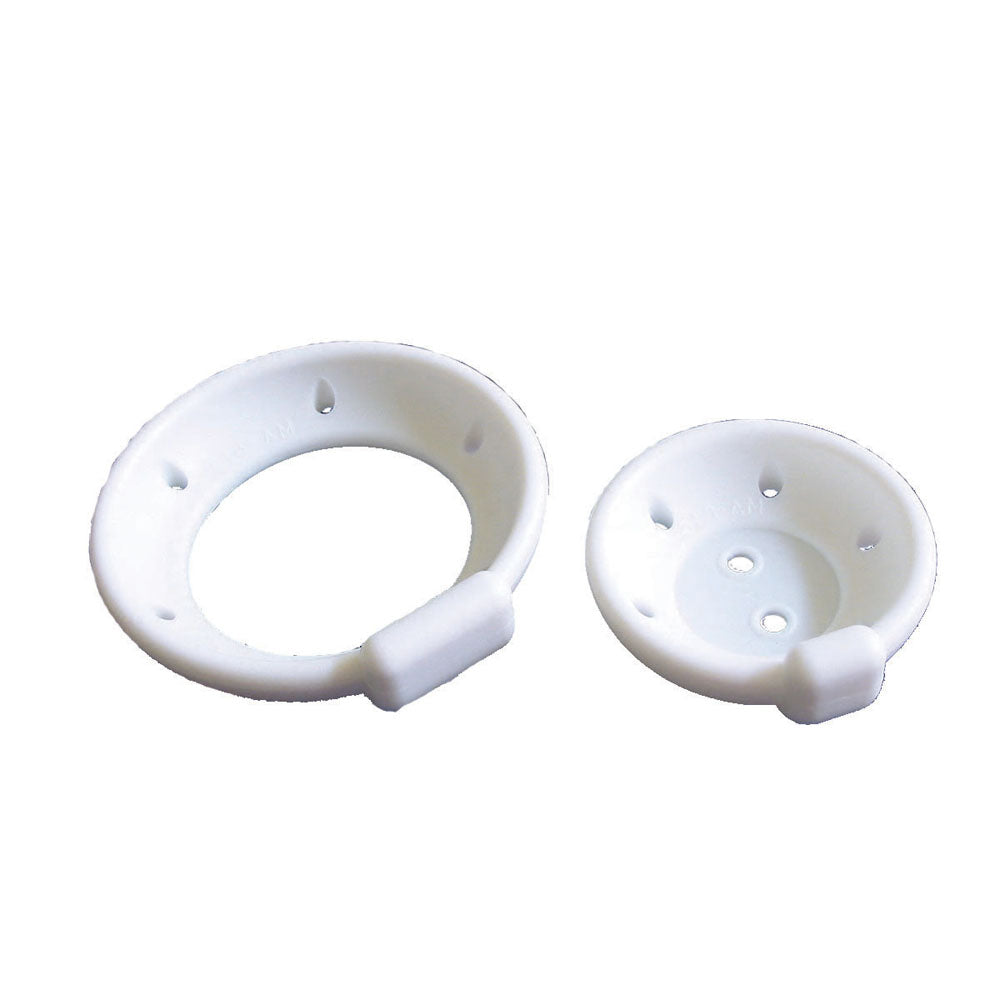
Vaginal discharge, odor, erosion, and bacterial vaginosis are among the most frequently cited adverse events in pessary literature—and clinical evidence consistently links them to infrequent cleaning and inadequate follow-up rather than to the device itself. This guide consolidates the current consensus on cleaning technique, material-specific care, and replacement decision criteria for a consistent, defensible clinical protocol.
Why Cleaning and Care Protocols Matter
Pessaries are FDA 510(k)-cleared Class II medical devices worn in direct contact with vaginal epithelium. That proximity means that device contamination and surface degradation translate directly into tissue responses. The AUGS-SUNA 2023 Clinical Consensus Statement identifies cleaning as a foundational management step, and the broader evidence base—including the Bugge et al. Cochrane 2020 systematic review—confirms that most pessary-related complications are not intrinsic to the device but are products of inadequate maintenance and delayed follow-up.
The Standard Cleaning Technique — Soap and Water
The AUGS-SUNA consensus and manufacturer instructions for use (IFU) align on a single standard: mild soap and warm water. The technique is straightforward but the execution details matter:
- Use a mild, unscented soap—no harsh detergents, antibacterial formulations with triclosan, or fragrance additives
- Scrub the entire device surface for a minimum of 15 seconds using a soft-bristled brush; pay particular attention to any recesses, holes, or suction cups where secretions accumulate
- Rinse under running warm water for at least 30 seconds; rinse until the water runs clear
- Allow to air-dry completely before reinsertion or storage; an incompletely dried pessary may introduce moisture that promotes microbial growth
Cleaning agents to avoid for silicone pessaries:
- Bleach and bleach-based disinfectants — degrade the silicone polymer matrix and leave cytotoxic residue
- Rubbing alcohol (isopropyl alcohol) — also degrades silicone over time and is not indicated for routine pessary cleaning
- Hydrogen peroxide — oxidizes the silicone surface and can cause surface pitting
- Boiling — softens silicone material with repeated exposure; most manufacturers explicitly prohibit boiling in their IFU; always verify with the specific product’s IFU before any heat-based reprocessing
Note: acrylic (rigid) pessaries such as some Gellhorn variants have different chemical resistance profiles; they must not be autoclaved or soaked in alcohol. Soap-and-water cleaning is appropriate for both material types for patient-directed home care. For clinic reprocessing of silicone fitting sets, see the Fitting Kit Reprocessing section below.
Cleaning Frequency by Patient Management Type
The appropriate cleaning interval depends primarily on who manages the pessary—the patient or the clinician.
| Management type | Who cleans the pessary | Minimum cleaning frequency | Office visit interval |
|---|---|---|---|
| Clinician-managed (patient does not self-remove) | Clinician at each office visit | Every office visit; typically every 3 months | Every 3–4 months (ACOG recommendation) |
| Patient self-managed (patient removes and reinserts at home) | Patient at home with each removal; reinforced at office visits | With each removal; at minimum weekly for most protocols | Annually if patient is adherent and asymptomatic |
| Cube pessary (requires nightly removal per protocol) | Patient nightly | Nightly | First follow-up within 4 weeks of fitting; then per clinician assessment |
The cube pessary requires nightly removal and cleaning; all other pessaries in clinician-managed protocols require cleaning at every office visit, with a maximum interval of 3 months between cleanings.
Document that cleaning was performed at each visit. The PMC review on pessary treatment for POP notes that self-managed patients who remove, clean, and replace their pessary independently can be followed annually when adherent—but this requires confirmed patient competency at fitting and at the first follow-up visit.
Cleaning the Cube Pessary — Special Considerations
The Cube Pessary occupies a category of its own in pessary care. Unlike support pessaries that are removed at scheduled office visits, the cube employs suction cups that adhere to the vaginal walls—and sustained suction without daily release is the primary mechanism behind cube-related tissue complications.
The standard cube pessary protocol:
- Remove nightly; clean with mild soap and warm water as described above
- Inspect all six suction cups for tissue adherence, discoloration, surface cracking, or deformation at each cleaning
- Allow to dry fully; reinsert the following morning per the clinician’s specific protocol
- If discoloration or adherent tissue is observed, do not reinsert—schedule an earlier clinical assessment
A patient who cannot reliably comply with nightly removal should not be fitted with a cube pessary. Non-compliance significantly elevates the risk of incarceration—partial or complete embedding of the device into the vaginal epithelium—which requires clinical or surgical management. If nightly self-removal is not feasible, a Gellhorn Pessary or a clinician-managed support pessary is a more appropriate shape choice for severe prolapse.
Storage When Not in Use
When a pessary is temporarily removed for a “pessary holiday,” infection treatment, or surgical recovery, proper storage preserves device integrity:
- Store in a clean, dry container; avoid airtight bags for silicone, which trap moisture
- For clinic-managed devices: label the container with patient name, shape, and size
- Before reinsertion after any storage period, inspect for cracks, deformation, or persistent discoloration; a device that fails this inspection should be replaced
Pessary Replacement — When and Why
Silicone pessaries are designed for long-term use. There is no single universal replacement interval, and it is clinically inappropriate to replace a structurally intact silicone pessary on a fixed schedule if it shows no signs of degradation. Replacement is indicated when one or more of the following criteria are met:
- Visible cracking, surface pitting, or deformation — cracks harbor bacteria and cannot be adequately cleaned; a cracked pessary must be replaced immediately
- Persistent odor despite correct cleaning technique — suggests structural degradation and absorption of organic material into the device surface; replacement is appropriate even without visible cracking
- Change in material flexibility or shape retention — a pessary that no longer springs back to its original shape may no longer provide adequate support
- Change in patient anatomy — significant weight change, pelvic surgery, progressive vaginal atrophy, or change in prolapse stage may require a different size or shape rather than replacement of the same device
- Patient or clinician discomfort attributable to the device rather than to fit, when no other cause is identified
Material longevity: data from a PVC vs. silicone pessary material trial indicates silicone pessaries may remain serviceable for up to approximately 10 years if intact and properly maintained. PVC pessaries—a legacy material—require more frequent replacement; some protocols replace them at each clinic visit. Latex pessaries carry allergy risk and are rarely used in current practice.
A pessary is a reusable medical device, never a permanent implant.
Fitting Kit Reprocessing for Clinic Use
Fitting kits contact intact vaginal mucosa and are classified as semi-critical devices under the CDC Spaulding classification. High-level disinfection (HLD) is required between patients—glutaraldehyde-based or OPA solutions per institutional protocol. Soap-and-water cleaning is a prerequisite before HLD, not a substitute. Consult the manufacturer’s IFU for autoclavability and disinfectant compatibility; never transfer a clinic fitting device to a patient’s personal-use set without completing the reprocessing cycle.
For a comprehensive reprocessing workflow in the clinic or ASC setting, see the Pessary Fitting Set collection for current available sets.
Care Protocol by Pessary Shape — Quick Reference
| Shape | Patient self-removal for cleaning | Cleaning frequency | Special notes | Replace if… |
|---|---|---|---|---|
| Ring / Ring with Knob / Ring with Support | Yes, if patient-managed | With each removal; min. every 3 months at office visit | Easiest to self-manage; fold-and-insert design | Cracking, deformation, persistent odor |
| Dish / Dish with Knob | Yes, if patient-managed | With each removal; min. every 3 months at office visit | Inspect knob base for buildup | Cracking, knob discoloration/degradation |
| Gellhorn | Typically clinician-managed | Every office visit (every 3 months) | Stem requires thorough cleaning; check stem-disc junction | Cracking at stem, disc deformation |
| Cube | Yes — nightly removal required | Nightly | Inspect all 6 suction cups at each cleaning; non-compliance = incarceration risk | Cup deformation, cracking, persistent adherent tissue marks |
| Donut / Shaatz | Typically clinician-managed | Every office visit (every 3 months) | Interior channel requires careful scrubbing with soft brush | Loss of shape, surface degradation |
All pessaries require soap-and-water cleaning at each office visit; the cube pessary requires nightly patient removal and cleaning.
Escalation Criteria — When Cleaning Is Not Enough
A properly maintained pessary rarely causes severe complications. When these findings are present at any inspection or follow-up, they indicate a clinical problem that cannot be resolved by cleaning alone:
- Purulent, malodorous, or blood-tinged vaginal discharge
- Vaginal bleeding of any amount
- New or worsening pelvic pain
- Visible vaginal erosion, ulceration, or granulation tissue
- Difficulty voiding or elevated post-void residual
- Inability to remove the pessary in a patient who was previously self-managing
These presentations require clinical reassessment. For complications including erosion staging and incarceration management, see the pessary side effects and complications guide. For removal technique including stuck pessaries, see the pessary removal guide. Return to the vaginal pessaries clinical guide for the full pillar overview, or browse the All Pessaries collection.
Frequently Asked Questions
How often should a pessary be cleaned?
Clinician-managed pessaries should be cleaned at every office visit, no more than 3 months apart per ACOG guidance. Patient-managed pessaries are cleaned with each removal. The cube pessary requires nightly removal and cleaning regardless of management type.
What cleaning products should be avoided with silicone pessaries?
Avoid bleach, rubbing alcohol, hydrogen peroxide, and boiling—these agents degrade silicone or cause surface pitting that harbors bacteria. Mild, unscented soap and warm water is the standard per manufacturer IFU and AUGS-SUNA consensus. Verify with the product’s specific IFU before applying any disinfectant.
How long do silicone pessaries last?
Current trial data suggests intact silicone pessaries may remain serviceable for up to approximately 10 years with proper care. Replacement is driven by device condition—cracking, deformation, or persistent odor—not calendar interval. PVC pessaries require more frequent replacement, sometimes at each clinic visit.
Can a pessary be boiled or autoclaved?
Boiling is contraindicated for most silicone pessaries—it progressively softens the material and is prohibited in most IFU. Some silicone fitting sets are autoclavable, but confirm with the specific IFU. Acrylic pessaries must not be autoclaved or soaked in alcohol. For clinic reprocessing, apply the CDC Spaulding semi-critical device standard and follow manufacturer-validated instructions.
Does a cube pessary need to be removed every night?
Yes. Sustained suction without daily release elevates the risk of tissue adherence, erosion, and incarceration. Nightly removal and cleaning is standard of care. A patient unable to comply with nightly self-removal is not a candidate for the cube; a different shape should be selected at fitting.
This article is for informational purposes for healthcare professionals. It does not constitute medical advice or replace clinical judgment. Always follow your institution’s protocols and the manufacturer’s instructions for use.