
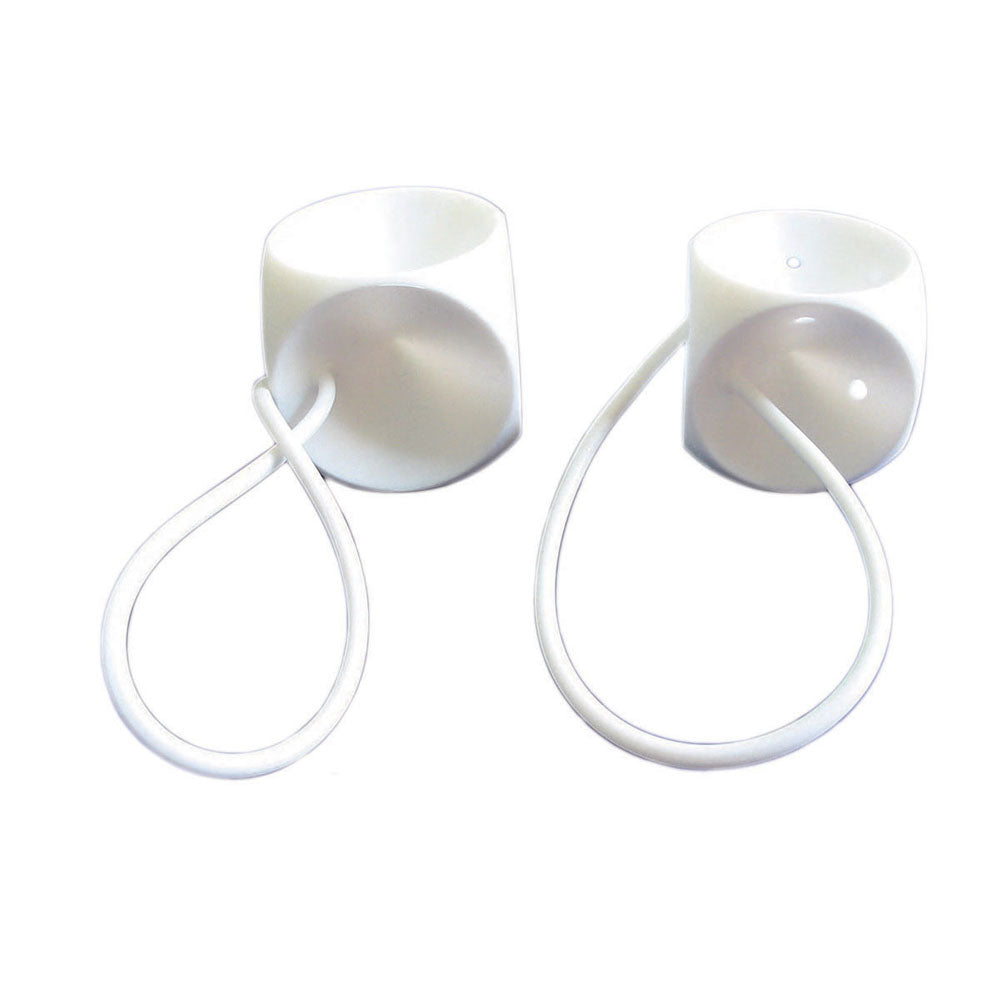
Pessary therapy is highly effective for managing pelvic organ prolapse and stress urinary incontinence, but device-related adverse events are a real part of long-term management. Understanding the full spectrum — from expected minor findings to rare but serious complications — allows clinicians to counsel patients at fitting, structure appropriate follow-up, and act decisively when escalation is warranted.
This guide covers the clinical presentation, severity classification, and management of the primary pessary-related adverse events: vaginal discharge, abrasion, erosion and ulceration, bacterial vaginosis, urinary tract infection, voiding dysfunction, dislodgement, and pressure necrosis. A severity-tier escalation table is included to support triage decisions.
For shape selection to reduce complication risk from the outset, see our types of pessaries decision guide. For stuck pessary removal, see our stuck pessary removal guide. For cleaning protocols that prevent the most common complications, see our pessary cleaning and care guide.
Pessary Complications: Clinical Context and Overall Rates
The majority of pessary-related complications are minor, manageable, and do not require device discontinuation. The AUGS-SUNA 2023 Clinical Consensus Statement on Vaginal Pessary Use classifies complications as: vaginal discharge, infection, abrasions, erosions and ulcerations, incarceration, and fistulas — in approximate ascending severity.
Clinical trial data from Panman et al. (2016), cited in the Bugge et al. Cochrane 2020 review, found that 60% of women who persisted with a pessary at 24 months reported at least one side effect: increased vaginal discharge (n=14 of 35), vaginal wall irritation or erosion (n=10), and increased urinary incontinence (n=5). Among those who discontinued, vaginal erosion accounted for two of twelve discontinuations. Rates in patients who miss follow-up are substantially higher.
The most protective factor against serious complications is structured follow-up. AUGS-SUNA 2023 recommends the first follow-up within four weeks of fitting. For patients who cannot self-manage, ACOG Practice Bulletin 214 recommends follow-up every three to four months; for patients who self-remove and reinsert, annual evaluation is the minimum.
The AUGS-SUNA 4-Tier Vaginal Tissue Classification
The AUGS-SUNA 2023 Clinical Consensus Statement provides a standardized four-tier classification for pessary-related vaginal tissue changes, documented at every follow-up visit by speculum examination.
| Tier | Finding | Clinical significance | Immediate action | Reinsertion criteria |
|---|---|---|---|---|
| Tier 1 | Erythema | Expected; does not require pessary discontinuation in isolation | Document; consider local estrogen if atrophy is present; optimize fit | Pessary may remain in place with monitoring |
| Tier 2 | Abrasion | Superficial epithelial breach; usually related to fit or atrophy | Refit or downsize; prescribe local estrogen; reduce wear time if applicable | Pessary may continue if abrasion is superficial and improving |
| Tier 3 | Erosion / Ulceration | Full-thickness epithelial loss; requires active management | Remove pessary; apply local estrogen for 2–4 weeks; confirm healing before reinsertion | Only after complete epithelial healing confirmed on exam |
| Tier 4 | Fistula (vesicovaginal or rectovaginal) | Rare; most severe; results from unmanaged pressure necrosis | Remove pessary immediately; urgent referral to urogynecology | Pessary contraindicated until fistula is surgically repaired |
Key takeaway: Tier 1 erythema is a monitoring signal; Tier 3 erosion/ulceration requires pessary removal and local treatment before reinsertion; Tier 4 fistula requires urgent specialist referral and pessary is contraindicated until repair is complete.
Vaginal Discharge: The Most Common Adverse Event
Increased vaginal discharge is the most frequently reported pessary-related complaint, per the Al-Shaikh et al. review of pessary use in stress urinary incontinence. A modest increase in clear or white discharge is a physiologic response to a vaginal foreign body and is expected, particularly in the early weeks after fitting.
Discharge that requires clinical evaluation has one or more of the following characteristics:
- Purulent or cloudy in appearance
- Malodorous (fishy odor suggests bacterial vaginosis)
- Blood-tinged or frankly bloody
- Associated with pelvic discomfort or pelvic pressure
Management of abnormal discharge:
- Increase pessary cleaning frequency; assess adequacy of the patient’s self-care routine
- Assess for bacterial vaginosis with vaginal pH, microscopy, or NAAT testing; treat per standard of care if confirmed
- In postmenopausal patients, consider local vaginal estrogen — atrophic mucosa is the most common contributing factor
- If discharge persists: consider a shape change (cube pessary to a Gellhorn pessary, which has less mucosal surface contact) or a two-to-four-week pessary holiday
BV does not require device removal if it resolves with treatment, but recurrent BV warrants shape change or pessary holiday consideration.
Vaginal Erosion and Ulceration: Prevention and Management
Erosion is localized full-thickness epithelial loss from sustained pressure at the pessary rim or disc contact points. Common sites are the anterior vaginal wall at the rim and the posterior fornix in Gellhorn or Donut users.
Risk factors:
- Vaginal atrophy — postmenopausal state, particularly without local estrogen
- Ill-fitting pessary (too large, causing rim pressure; too small, causing mobility and friction)
- Infrequent removal and cleaning, which prevents detection of early Tier 1–2 changes
- Extended overnight wear in cube pessary users who do not comply with nightly removal protocols
Prevention: adequate fitting, local estrogen when clinically appropriate, and scheduled follow-up. Both ACOG Practice Bulletin 214 and AUGS-SUNA 2023 emphasize that complications correlate with gaps in follow-up care rather than with pessary use per se.
Management when erosion is identified:
- Remove the pessary and document the erosion location, size, and tier (Tier 3 by definition)
- Prescribe topical vaginal estrogen for two to four weeks
- Schedule a follow-up visit to confirm complete epithelial healing before reinserting the pessary
- If healing is confirmed: refit with the same shape and size, or refit to a smaller size or different shape if the original fit contributed to the erosion
- If erosion is non-healing after four to six weeks of appropriate local management: refer to urogynecology to exclude malignancy and plan repair
Non-healing erosion is an escalation trigger. Any ulcer that fails to close within four to six weeks of pessary removal and local treatment requires specialist evaluation to exclude underlying vaginal or cervical malignancy before reinsertion.
Urinary Complications: Voiding Difficulty, Recurrent UTI, and De Novo Incontinence
Urinary symptoms are frequently related to pessary fit or shape selection and are the second most clinically significant complication category.
Voiding difficulty results from urethral kinking, over-compression from a knob variant that is too large, or an oversized pessary. Assess post-void residual (PVR) at follow-up. If PVR is elevated (>150 mL or per your institutional threshold), refit to a smaller size or consider a non-knob variant. The Bugge et al. Cochrane 2020 review identified de novo voiding difficulty as a measurable adverse event in pessary users.
Recurrent UTI is associated with pessary retention. Consider a pessary holiday and urologic evaluation if a patient develops more than two UTIs in six months while using a pessary.
De novo or worsening incontinence can occur when a knob-variant pessary is mispositioned or undersized. Reassess position on examination; refit to a different size or revert to a non-knob ring if incontinence worsens.
Unmasked occult SUI is distinct from a complication: some patients with severe prolapse have occult stress incontinence that becomes apparent only after the prolapse is reduced by a pessary. Counsel patients about this possibility before fitting, and assess with a reduction test in patients with advanced prolapse.
Dislodgement and Expulsion
Spontaneous expulsion is the most common reason for pessary discontinuation in the first three months. It reflects a size-vagina mismatch — typically a pessary too small for the patient’s introital caliber — compounded by a wide genital hiatus or short perineal body. Always assess retention with a standing Valsalva maneuver at the fitting visit; if the pessary descends to the introitus, refit before the patient leaves.
Management: refit to the next size up, or transition to a more retentive shape. For patients who repeatedly expel support pessaries (ring, dish), a space-filling device such as a Gellhorn pessary may be more appropriate, with the understanding that these devices carry a higher complication risk in non-adherent patients and typically require clinician-assisted removal.
New-onset dislodgement in a previously stable patient warrants clinical reassessment: evaluate for vaginal atrophy changing vaginal dimensions, or device surface degradation. Silicone pessaries from Bioteque and Milex are FDA 510(k)-cleared Class II devices with defined replacement schedules — a pessary that is discolored, deformed, or tacky should be replaced. Browse the Minerva pessary collection for current replacement options.
Bacterial Vaginosis and Vaginal Infection
Bacterial vaginosis is the most common infection associated with pessary use. A vaginal foreign body alters the local microbiome in some patients, reducing lactobacillus colonization. Symptoms — fishy odor, gray-white discharge, and vaginal pH above 4.5 — should be assessed at every follow-up visit.
BV does not require pessary removal if it responds to treatment. Recurrent BV warrants:
- Increasing cleaning frequency to daily or twice daily
- Switching from a cube or donut pessary (highest surface contact) to a ring or Gellhorn (less mucosal coverage)
- A two-to-four-week pessary holiday to normalize vaginal flora
Active pelvic or vaginal infection, including untreated BV, is a contraindication to pessary insertion per both ACOG and AUGS-SUNA guidance. Do not reinsert until the infection has resolved on examination.
Pressure Necrosis: Rare but Preventable
Pressure necrosis results from prolonged, unrelieved mucosal pressure and represents the end stage of an unmanaged erosion progression. In extreme cases — virtually always in patients lost to follow-up for months to years — it progresses to a vesicovaginal or rectovaginal fistula (Tier 4). The cube pessary carries the highest necrosis risk among current designs due to its suction mechanism and nightly-removal requirement; continuous wear without removal is a major risk factor.
Incarcerated pessaries — partially or fully embedded in vaginal epithelium through tissue overgrowth — are the most dramatic presentation. Clinical features include the patient unable to locate or remove the pessary, device absence on speculum exam, and pain, bleeding, or purulent discharge. Office removal should be attempted; if unsuccessful, refer to urogynecology. See our stuck pessary removal guide for extraction technique.
Prevention is the only effective strategy: schedule the first follow-up within four weeks of fitting, confirm the patient has the clinic’s after-hours contact, and document that escalation criteria were reviewed before the patient leaves.
Severity-Tier Escalation Table: Mild, Moderate, and Severe
The following table organizes pessary complications by severity and specifies the appropriate clinical response. This framework is designed to support clinician decision-making and to structure the patient education conversation at fitting.
| Complication | Severity | Defining features | Appropriate response |
|---|---|---|---|
| Mild discharge (clear/white, no odor) | Mild — Clinic call / routine visit | Physiologic; no odor; no blood | Reassure; optimize cleaning routine; monitor at next scheduled visit |
| Tier 1 erythema on exam | Mild — Clinic call / routine visit | Mucosal redness without epithelial breach | Document; consider local estrogen; optimize fit; monitor |
| Tier 2 abrasion | Mild-Moderate — Clinic call / visit within 2 weeks | Superficial epithelial breach; no full-thickness loss | Refit or downsize; local estrogen; reduce wear time; recheck in 2 weeks |
| Malodorous or purulent discharge | Moderate — Urgent clinic visit | Odor or opacity suggests infection (BV, aerobic vaginitis) | Vaginal swab / pH; treat infection; assess for erosion; do not reinsert without exam |
| Blood-tinged discharge | Moderate — Urgent clinic visit | Any blood in discharge requires evaluation | Speculum exam; classify tissue; rule out malignancy if erosion is non-healing |
| Spontaneous dislodgement | Moderate — Clinic visit for refit | Pessary expels during activity or at rest | Refit to larger size or more retentive shape; reassess at follow-up |
| Voiding difficulty / elevated PVR | Moderate — Urgent clinic visit | Incomplete emptying; hesitancy; PVR >150 mL | Remove or refit pessary; assess for urethral compression; PVR monitoring |
| New pelvic pain | Moderate — Urgent clinic visit | Pain not present at fitting; suggests pressure, infection, or incarceration | Speculum and bimanual exam; rule out incarceration; assess tissue |
| Tier 3 erosion / ulceration | Moderate-Severe — Urgent clinic visit | Full-thickness epithelial loss; bleeding on contact | Remove pessary; local estrogen 2–4 weeks; follow up to confirm healing before reinsertion |
| Non-healing erosion (>4–6 weeks) | Severe — Urogynecology referral | Ulcer fails to close despite pessary removal and local treatment | Refer to urogynecology to exclude malignancy and plan repair |
| Vaginal bleeding (any amount) | Severe — Urgent clinical assessment | Frank bleeding, not discharge-associated | Speculum exam same day; rule out malignancy, severe erosion, incarceration |
| Pessary incarceration / inability to remove | Severe — Urgent clinic visit or ER | Device embedded in epithelium; not visible or palpable in standard position | Refer to urogynecology if office removal fails; ER if patient is in acute distress |
| Suspected fistula (Tier 4) | Severe — ER / urgent urogynecology | Fecal or urinary matter per vagina; continuous wetness despite no incontinence etiology | Immediate pessary removal; ER assessment; urogynecology referral; pessary contraindicated until repaired |
Standing rule for your patient education script at fitting: vaginal bleeding of any amount, inability to remove the pessary, new pelvic pain, difficulty urinating, and malodorous discharge are all indications to call the clinic — not to wait for the next scheduled appointment.
When to Call the Clinician: Patient Counseling Summary
Deliver the following escalation instructions verbally at every fitting visit and reinforce in writing. Per ACOG Practice Bulletin 214, patients should seek clinical assessment — not self-manage — for any of the following:
- New or worsening pelvic pain or pressure
- Vaginal bleeding of any amount
- Discharge that is malodorous, purulent, or blood-tinged
- Difficulty urinating or sensation of incomplete bladder emptying
- Sensation that the pessary is dropping or has expelled
- Inability to remove the pessary (in self-managing patients)
These six triggers apply regardless of pessary shape, material, or duration of use. AUGS-SUNA 2023 reinforces that no symptom in this category should be managed by the patient alone. Provide the clinic’s direct contact number and an after-hours protocol at fitting, and document that escalation criteria were reviewed.
Related Clinical Guides
Complication risk begins with shape selection: our types of pessaries decision guide covers selection logic by prolapse type and patient anatomy. For incarcerated or difficult-to-remove devices, the stuck pessary removal guide provides technique detail. Routine cleaning protocols that prevent discharge and erosion are in our pessary cleaning and care guide. The vaginal pessaries clinical guide provides a full pillar-level overview. Browse the Prolapse Solutions collection for current Minerva pessary inventory.
Frequently Asked Questions
Is vaginal discharge normal with a pessary?
A modest increase in clear or white, odorless vaginal discharge is an expected response to a foreign body in the vaginal vault. It does not indicate infection and does not require pessary removal. Discharge that is malodorous, purulent, blood-tinged, or associated with pelvic discomfort requires clinical evaluation. The distinction is clinical — instruct patients to call the clinic rather than self-assess based on color alone.
What should a clinician do when a patient has a vaginal ulcer from a pessary?
Remove the pessary immediately and classify the lesion using the AUGS-SUNA 4-tier scale (Tier 3 = full-thickness erosion/ulceration). Prescribe topical vaginal estrogen and schedule a follow-up visit in two to four weeks to confirm healing before reinsertion. If the ulcer fails to heal after four to six weeks of appropriate local management, refer to urogynecology to exclude malignancy and plan surgical repair. Do not reinsert the pessary until complete epithelial healing is confirmed on speculum examination.
What are the signs that a pessary is causing urethral obstruction?
Urethral obstruction from a pessary presents as hesitancy, a weak urinary stream, sensation of incomplete emptying, or an elevated post-void residual on measurement. It is most common with ring-with-knob or dish-with-knob pessaries where the knob is too large or has migrated anteriorly. Assess PVR at each follow-up visit in patients using knob-variant pessaries. If PVR is elevated, remove or downsize the pessary and reassess voiding function before reinsertion.
Can a pessary cause a vaginal fistula?
Yes, but fistula formation is rare and virtually always preventable. It represents the final stage of a pressure necrosis cascade: sustained pressure on vaginal tissue, progressing from erythema through erosion to full-thickness necrosis, eventually creating a communication between the vagina and the bladder or rectum. This progression requires weeks to months of unrelieved pressure without clinical intervention. Structured follow-up prevents it. If a vesicovaginal or rectovaginal fistula is suspected, remove the pessary immediately, refer urgently to urogynecology, and consider emergency department assessment if the patient is in acute distress. Pessary use is contraindicated until the fistula is repaired.
How long should a pessary be removed to allow an erosion to heal?
Per ACOG Practice Bulletin 214 guidance and standard clinical practice, the pessary should remain out for two to four weeks following identification of a Tier 3 erosion, with topical vaginal estrogen applied throughout this period. The pessary should not be reinserted until complete healing is confirmed on speculum examination at a follow-up visit. If healing has not occurred after four to six weeks, urogynecology referral is indicated. There is no fixed duration that guarantees healing — clinical confirmation of epithelial closure is the reinsertion criterion, not elapsed time alone.
This article is for informational purposes for healthcare professionals. It does not constitute medical advice or replace clinical judgment. Always follow your institution’s protocols and the manufacturer’s instructions for use.