
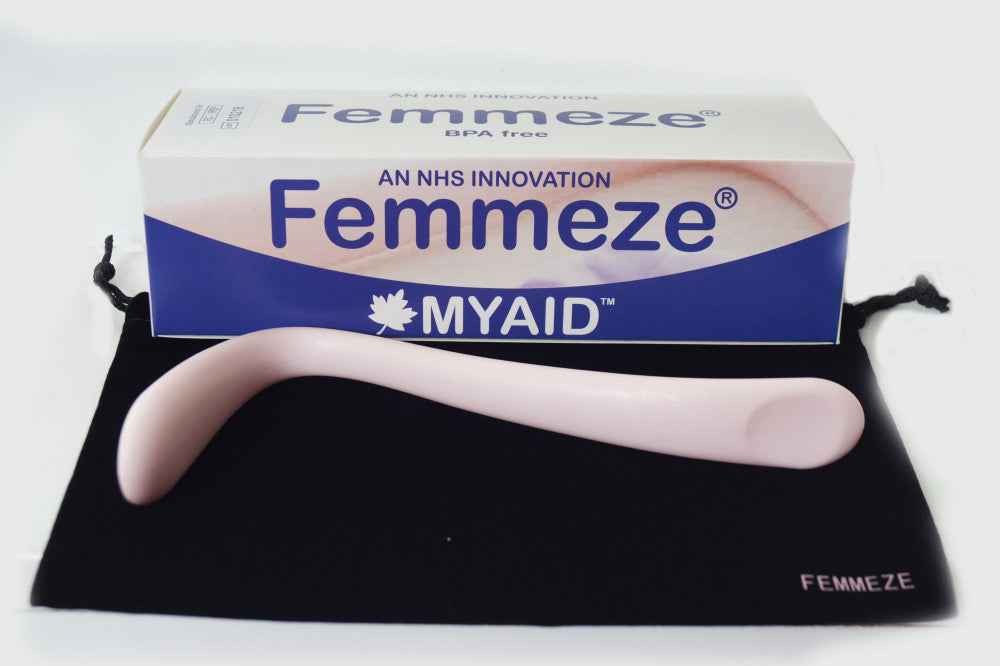
Posterior vaginal wall prolapse presents a clinical puzzle that anterior prolapse does not: the standard first-line pessary — a ring with support — was designed primarily to elevate the anterior compartment. When a patient’s dominant defect is a rectocele, the fitting logic shifts. Two shapes — the Gehrung and the Hodge — address posterior wall descent more directly, and understanding their mechanisms, limitations, and escalation paths is essential for managing prolapse conservatively.
This guide covers:
- The anatomy and key symptoms of rectocele and posterior wall prolapse
- Whether pessaries reliably reduce posterior prolapse symptoms
- Gehrung and Hodge mechanics, indications, and fitting considerations
- A shape comparison table and escalation criteria
- A practical fitting workflow and complications to monitor
Rectocele and Posterior Wall Prolapse: Anatomy and Symptoms
A rectocele is herniation of the posterior vaginal wall into the vaginal canal, driven by a rectovaginal fascial defect that allows the anterior rectal wall to bulge anteriorly. It differs from an enterocele, where a peritoneal sac descends into the upper posterior compartment secondary to apical support failure — a distinction that matters for surgical planning and POP-Q interpretation.
Relevant posterior POP-Q landmarks: Ap (midline posterior wall 3 cm proximal to the hymen; normal range −3 to +3 cm) and Bp (most distal upper posterior vaginal wall). Posterior wall prolapse is the second most common compartment involved and rarely occurs in isolation. Symptoms pointing specifically to a posterior defect include:
- Sensation of incomplete rectal evacuation
- Need for vaginal or perineal manual support during defecation (splinting)
- Rectal pressure or heaviness, worsened with prolonged standing
- Posterior vaginal bulge
- Constipation without a primary colonic cause
Does a Pessary Actually Help with Rectocele?
Yes — pessaries can provide meaningful symptom relief, though the posterior compartment responds less reliably than the anterior compartment to support pessary therapy alone. Support pessaries primarily elevate the vaginal apex and restore anterior compartment position, which secondarily reduces posterior wall prolapse by restoring shared structural scaffolding. They do not directly repair the posterior fascial defect.
IUGA data indicate that overall prolapse symptom resolution occurs in 70–90% of patients who achieve successful fitting, but bowel-specific symptoms (incomplete evacuation, splinting) resolve in only 30–50% of cases. Patients whose chief complaint is obstructed defecation or fecal incontinence may require surgical posterior repair regardless of pessary success. For a broader overview, see the Minerva guide Restoring Comfort: A Comprehensive Guide to Rectocele.
Gehrung Pessary — Designed for Combined Anterior-Posterior Support
The Gehrung pessary is the shape most closely associated with combined anterior and posterior wall prolapse. Its arch-shaped silicone structure positions two arms along both vaginal walls simultaneously, rather than seating exclusively in the anterior fornix like a ring. The material is manually moldable, allowing the clinician to individualize arch curvature for asymmetric or multicompartment defects.
Best indications: combined cystocele and rectocele; stage II–III combined anterior-posterior prolapse; cases where a ring with support adequately controls the anterior wall but the posterior wall remains symptomatic. Insert longitudinally, then rotate to arch position. The Gehrung is among the more technically demanding shapes to fit; clinician experience matters. Wide genital hiatus (GH ≥ 4 cm) often prevents adequate retention — consider Gellhorn in those cases. Self-management is more challenging than with a ring or Hodge.
Hodge Pessary — Lever Support for Posterior Descent
The Hodge pessary operates on lever mechanics: the posterior bar rests in the posterior fornix while the anterior limb seats behind the pubic symphysis, elevating the posterior fornix and providing mild apical support. Its specific clinical niche is mild uterine retroversion with associated posterior vaginal wall descent.
Best indications: mild-to-moderate rectocele (Bp at or slightly below the hymen) with adequate posterior fornix depth; stage I–II posterior prolapse without significant apical or anterior involvement. The Hodge is less effective in post-hysterectomy vault prolapse (absent cervix removes the posterior bar’s anatomical anchor) and is not suited to Bp > +2 cm.
Comparison Table — Gehrung vs. Hodge vs. Ring with Support
| Feature | Gehrung | Hodge | Ring with Support |
|---|---|---|---|
| Mechanism | Anterior + posterior arch support | Lever (anteroposterior) | Anterior membrane elevation |
| Best fit for | Combined anterior + posterior prolapse | Mild posterior + retroverted uterus | Predominantly anterior prolapse |
| Moldable fit | Yes | No | No |
| Self-management | Difficult | Moderate | Moderate to high |
| Stage range (posterior) | II–III combined | I–II posterior only | I–III anterior dominant |
| Post-hysterectomy use | Possible, with limitations | Generally not recommended | Frequently fails without cervix |
Takeaway: For isolated or dominant posterior wall prolapse, the Gehrung pessary is the most anatomically targeted option; the Hodge is appropriate when mild uterine retroversion contributes to posterior descent. A ring with support remains the preferred starting point when the anterior compartment is the dominant defect.
When Posterior Prolapse Requires Escalation
The Gehrung and Hodge address posterior wall prolapse within a defined anatomical range. Escalation is indicated when:
- Bp > +3 cm (leading edge more than 3 cm beyond the hymen)
- Stage III–IV combined posterior and apical prolapse
- Recurrent Gehrung expulsion on Valsalva despite correct sizing
- GH ≥ 4 cm preventing adequate Gehrung retention
The typical escalation path: the Gellhorn pessary provides apical anchoring that secondarily reduces posterior wall descent and is the space-filling anchor for advanced prolapse; a Donut pessary fills posterior space in moderate-to-severe combined posterior and uterine prolapse. If dominant symptoms are obstructed defecation or fecal incontinence rather than vaginal bulge, surgical posterior colporrhaphy evaluation is appropriate regardless of pessary success. Explore the Prolapse Solutions collection for the full range of available shapes.
Fitting and Follow-Up — Posterior-Dominant Workflow
Key steps that differ when the patient’s dominant defect is posterior:
- Measure GH first. A wide hiatus reduces the likelihood of Gehrung retention — if GH ≥ 4 cm with a weak perineal body, consider Gellhorn as the primary trial.
- Assess all three compartments. Confirm Aa/Ba (anterior), C/D (apical), and Ap/Bp (posterior); most patients presenting with rectocele have multicompartment involvement.
- Manually reduce the posterior wall during Valsalva. Confirm that reduction eliminates symptoms — persistent bowel complaints after reduction suggest a functional rather than purely anatomical driver.
- Confirm retention standing. Gehrung expulsion during ambulation is more common in posterior-dominant patients; a standing Valsalva test before discharge is essential.
Post-fitting: the splinting reflex often resolves once the pessary is seated; confirm at the two-week follow-up. If bowel symptoms persist, pelvic floor physiotherapy referral is the evidence-supported adjunct. Per ACOG and AUGS guidance, reassessment every 3–12 months is appropriate. See StatPearls: Pelvic Organ Prolapse for a POP classification overview and the Cochrane review by Bugge et al. (2020) for pessary adverse event data.
Posterior Prolapse Complications to Monitor
Posterior wall contact from pessary use introduces complication patterns less common with purely anterior-support devices:
- Posterior wall erosion (Gehrung): Inspect the posterior wall at every follow-up. Granulation tissue, ulceration, or mucosal thinning at the contact points requires pessary removal and vaginal estrogen therapy before reinsertion.
- Rectal discomfort (Hodge): An oversized Hodge or one that has migrated posteriorly can cause rectal pressure during bowel movements. Remove and reassess sizing before reinsertion.
- Discharge accumulation (Gehrung): The arch structure creates enclosed spaces where vaginal discharge accumulates. Follow the manufacturer’s cleaning instructions at every removal.
Immediate escalation triggers that require clinical reassessment: new rectal bleeding, suspected rectovaginal fistula, urinary or bowel obstruction, or persistent malodorous discharge despite cleaning.
Frequently Asked Questions
Can a pessary fix a rectocele?
A pessary does not repair the posterior fascial defect — it manages symptoms by restoring anatomical position and reducing prolapse-associated pressure. Patients with predominantly vaginal bulge and pelvic pressure often achieve durable relief; those whose chief complaint is obstructed defecation or fecal incontinence may require surgical posterior colporrhaphy.
Which type of pessary is best for a rectocele?
Selection depends on POP-Q stage, compartment distribution, and genital hiatus width — all of which require direct examination. For combined anterior and posterior wall prolapse, the Gehrung is the most anatomically targeted shape. For isolated mild posterior descent with uterine retroversion, the Hodge is often appropriate. Advanced posterior prolapse (Bp > +3 cm) or failure of simpler shapes calls for escalation to a Gellhorn or Donut.
Does a Gehrung pessary work for both cystocele and rectocele?
Yes — the combined anterior-posterior arch design of the Gehrung is specifically suited to patients with both defects. It is one of the few shapes providing simultaneous multicompartment support, though it is among the more technically demanding to fit and carries a higher self-management burden than a ring.
What happens to bowel symptoms after a pessary is fitted for rectocele?
IUGA data indicate that bowel-specific symptoms resolve in approximately 30–50% of patients who achieve successful pessary fitting for posterior wall prolapse — lower than the overall prolapse symptom resolution rate of 70–90%. The splinting reflex often diminishes once the posterior wall is supported, but functional bowel problems are not addressed by pessary therapy. Combining pessary use with pelvic floor physiotherapy improves functional bowel outcomes.
Related reading: What Is Vaginal Splinting? — clinical context for the most reported patient symptom in posterior wall prolapse.
This article is for informational purposes for healthcare professionals. It does not constitute medical advice or replace clinical judgment. Always follow your institution’s protocols and the manufacturer’s instructions for use.