
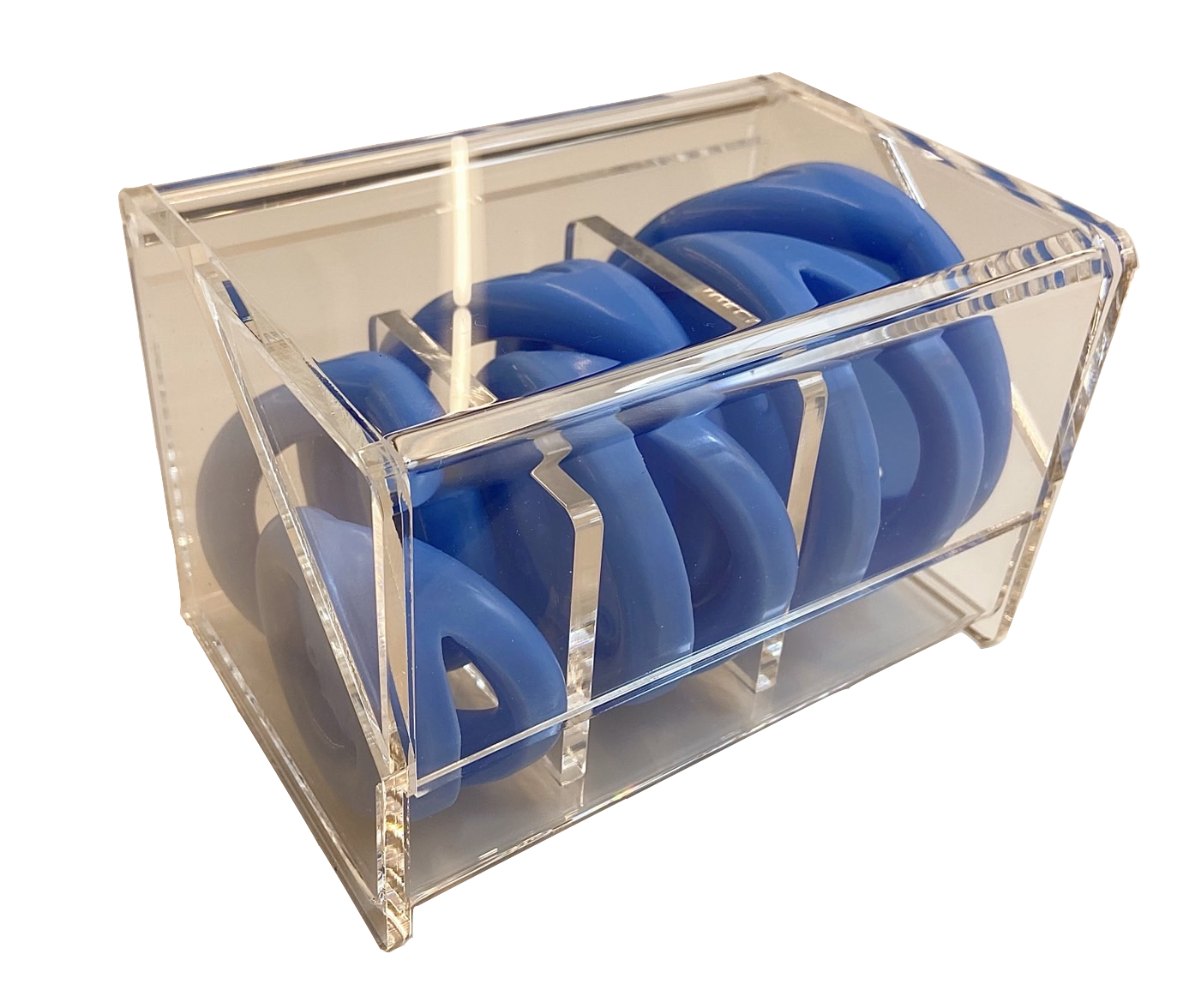
Pessary fitting services generate two distinct billing streams: one for the clinical procedure and one for the device itself. Many gynecology and urogynecology practices are comfortable with CPT 57160 but less familiar with the HCPCS supply codes, the DME MAC billing pathway, and the modifier logic that governs same-day E/M billing. This reference consolidates all four coding categories—procedure, supply, diagnosis, and follow-up visit—in one place.
Coding reference note: This post is for informational purposes only. Always verify codes, billing requirements, and current reimbursement rates with your practice’s billing department, a certified professional coder (CPC), or CMS directly. Codes and policies are subject to change.
In this guide:
- Why pessary billing involves two separate claim pathways
- CPT 57160: descriptor, global days, and co-billing rules
- HCPCS A4561 and A4562: supply codes and DME MAC billing
- ICD-10 diagnosis codes for POP and incontinence encounters
- E/M coding for follow-up and reassessment visits
- How to look up current Medicare rates for your locality
- Private payer considerations
Why Pessary Billing Has Two Separate Claim Pathways
Pessary services split across two separate Medicare claim types, each processed by a different contractor. The fitting and insertion procedure (CPT 57160) is a Part B physician service, billed to the local Medicare Administrative Contractor (MAC) under the Physician Fee Schedule. The pessary device itself (HCPCS A4561 or A4562) is a durable medical equipment supply, billed to a separate Durable Medical Equipment MAC (DME MAC).
This structural split has practical implications for your billing department:
- Two separate claim submissions, potentially on different timelines
- Two sets of payer rules, coding requirements, and remittance processes
- The device claim requires a PTAN (Provider Transaction Account Number), also called a supplier number, issued by the relevant DME MAC
Practices that prefer not to manage DME billing directly have an alternative: write a prescription for the pessary and route the patient to an enrolled DME supplier. In that model, the practice bills only CPT 57160 (the procedure) and the DME supplier handles the A4561/A4562 claim. Either approach is permissible; the right choice depends on your billing infrastructure and patient volume.
CPT 57160 — Fitting and Insertion of a Pessary
CPT 57160 carries the descriptor: “Fitting and insertion of pessary or other intravaginal support device.” It is the correct code when a clinician selects, fits, and inserts a pessary—whether on initial presentation or at a refitting visit where the size or shape changes.
Global period: zero. CPT 57160 carries 0 global days, which means there is no post-operative period during which follow-up E/M visits are bundled into the procedure fee. You can bill a separately identifiable E/M code on the same date as CPT 57160 without concern about a global period exclusion.
Key billing rules for CPT 57160:
- When to use: Initial fitting and any refitting that involves selecting a new size or shape for a patient
- When not to use: Routine cleaning and reinsertion without a fitting component—use an appropriate established-patient E/M code instead
- Modifier 25: When billing an E/M and CPT 57160 on the same date, append modifier 25 to the E/M code to indicate a separately identifiable service beyond the procedure itself
- Co-billing with G0101: For eligible Medicare patients, CPT 57160 can be billed on the same date as G0101 (cervical or vaginal cancer screening, pelvic and clinical breast exam) when both services are genuinely performed and documented
- Place of service: Typically 11 (office); non-facility rates apply in most pessary fitting scenarios
For the full CPT 57160 descriptor and coverage guidance, refer to the AAPC CPT 57160 code reference.
HCPCS Supply Codes — A4561 and A4562
The pessary device itself is billed separately from the fitting procedure using one of two HCPCS Level II supply codes. The applicable code depends on the material of the pessary dispensed.
| Code | Descriptor | Pessary Type | Billing Pathway | Clinical Notes |
|---|---|---|---|---|
| A4561 | Pessary, rubber, any type | Rubber or latex pessaries | DME MAC | Uncommon in current practice; latex allergy concern; historically lower reimbursement |
| A4562 | Pessary, non-rubber, any type | Silicone pessaries (Bioteque, Milex) | DME MAC | Applies to all silicone devices; the standard code for modern pessary practices |
Because most modern pessaries—including all Bioteque silicone models available through Minerva’s pessary catalog—are non-rubber, A4562 will be the applicable supply code for the majority of encounters.
Additional billing guidance for supply codes:
- Place of service on the supply claim: HOME (code 12), not the office. This reflects where the patient uses the device, not where the fitting occurred.
- Billing frequency: One unit per pessary dispensed. When billing a replacement pessary, document the clinical rationale (degradation, lost device, size change) in the chart.
- PTAN requirement: To bill A4561 or A4562 directly to Medicare, your practice must hold a valid PTAN (supplier number) from your DME MAC. Practices without a PTAN should route device claims through an enrolled DME supplier.
- DME fee schedule: Rates for A4561 and A4562 are published in the CMS DME fee schedule, separate from the Physician Fee Schedule used for CPT 57160.
For the full HCPCS A4562 code reference, see the AAPC HCPCS A4562 listing.
Follow-Up Visit Coding — Cleaning, Reinsertion, and Reassessment
Most pessary practices schedule follow-up visits every 3–12 months for cleaning, reinsertion, and clinical reassessment—a recommended cadence consistent with ACOG and AUGS guidance on pessary management. The correct coding for these visits depends on what actually occurs during the encounter.
CPT 57160 is not appropriate for routine cleaning and reinsertion without a fitting component. Using it for every follow-up visit is a common billing error. The table below maps encounter type to appropriate code:
| Encounter Type | Appropriate Code(s) | Notes |
|---|---|---|
| Initial pessary fitting | CPT 57160 + E/M (mod 25 on E/M) | Document clinical complexity to support E/M level |
| Refitting (size or shape change) | CPT 57160 + E/M (mod 25 on E/M) | Chart rationale for the change |
| Routine cleaning & reinsertion, stable patient, MA-performed | 99211 | Nurse/MA level; no MDM required; physician must supervise |
| Cleaning & reinsertion with physician exam and management decisions | 99212–99215 | Level based on MDM or time; document appropriately |
| Follow-up with complication (discharge, ulceration, bleeding) | 99212–99215 + relevant diagnosis codes | Higher complexity; consider urology/urogyn referral for persistent issues |
Document the clinical encounter—not just the procedure performed—to establish medical decision-making complexity and support the chosen E/M level.
Because CPT 57160 has zero global days, there is no post-operative bundling period that restricts E/M billing after a fitting visit. Each follow-up encounter stands on its own.
Modifier and Bundling Considerations
Modifier logic for pessary billing is straightforward, but errors here are a frequent source of denials:
- Modifier 25 on E/M: Required when billing an evaluation and management service on the same date as CPT 57160. Modifier 25 signals that the E/M is a separately identifiable service and not a routine pre-service evaluation included in the procedure.
- Modifier 59 / XP / XS: If a payer raises bundling concerns for two procedures performed on the same date, a modifier from the “X” family (XP for separate practitioner, XS for separate structure) may be needed. Consult a certified coder before applying these modifiers.
- Zero global days means no restriction on follow-up E/M billing: A patient who returns two weeks after a fitting for a complication assessment can be billed as an established-patient E/M without any global-period bundling concern.
- Avoid routine CPT 57160 at every follow-up: Applying 57160 to visits that do not include a fitting or refitting element is a documentation and billing compliance risk.
When in doubt, route complex modifier questions to a certified professional coder (CPC) or your practice’s compliance team.
ICD-10 Diagnosis Codes for Pessary Encounters
Linking the appropriate ICD-10 diagnosis code to your CPT and HCPCS claims is required to establish medical necessity. The N81.* prolapse series and N39.* incontinence series cover the majority of pessary encounters. Z46.89 is available for routine device management but should not be the only code when an active clinical condition is present.
| ICD-10 Code | Description | Common Encounter Type |
|---|---|---|
| N81.10 | Cystocele, unspecified | Anterior wall prolapse fitting |
| N81.11 | Cystocele, midline | Anterior wall prolapse, midline defect |
| N81.2 | Incomplete uterovaginal prolapse | Uterine prolapse, Stage II fitting |
| N81.3 | Complete uterovaginal prolapse | Advanced uterine prolapse, Stage III–IV fitting |
| N81.4 | Uterovaginal prolapse, unspecified | General POP when staging not specified |
| N81.6 | Rectocele | Posterior wall prolapse fitting; see also the rectocele management guide |
| N39.3 | Stress urinary incontinence (female) | SUI incontinence pessary fitting (ring with knob, dish with knob) |
| N39.41 | Urge incontinence | Urge component in mixed presentation |
| N39.46 | Mixed incontinence | Mixed SUI + urge; combined pessary + behavioral management |
| Z46.89 | Encounter for fitting/adjustment of other specified devices | Routine follow-up/adjustment when no active complaint drives the visit |
Always document the primary clinical indication—cystocele stage, incontinence type, rectocele severity—rather than defaulting to Z46.89 alone. The primary diagnosis supports medical necessity for both the procedure and supply claims.
For clinical guidance on pessary selection by prolapse type, review the ACOG pelvic support problems resource alongside the relevant POP-Q staging in your patient’s chart.
How to Look Up Current Medicare Rates
The CMS Physician Fee Schedule updates annually with each Medicare Physician Fee Schedule Final Rule, typically published each November for the following calendar year. Because rates also vary by geographic locality (MAC region and locality code), there is no single national rate that applies to every practice. The only reliable source for current, location-specific rates is the CMS lookup tool.
Step-by-step: looking up CPT 57160 on the CMS PFS tool
- Navigate to the CMS Medicare Physician Fee Schedule search
- Select the current year’s fee schedule and choose “Physician Fee Schedule” as the search type
- Enter 57160 in the HCPCS code field
- Select your MAC locality from the dropdown to apply the geographic adjustment factor for your region
- Review the non-facility total rate (applicable when the service is performed in your office, not a hospital or ASC)
For HCPCS A4561 and A4562 (supply codes): These codes are published in the CMS DME fee schedule, not the Physician Fee Schedule. Use the separate CMS DME fee schedule lookup available through the CMS website to find current rates for your DME MAC jurisdiction.
Rates change each January 1. Build a calendar reminder to recheck your key codes after each November Final Rule publication to catch any payment adjustments before the new year.
Private Payer Considerations
Medicare coding logic provides a reliable template for commercial payer billing, but private payers vary in their coverage and prior authorization requirements:
- CPT 57160 (procedure): Most commercial payers recognize CPT 57160 and apply similar modifier logic to Medicare. Verify your contracts for any payer-specific edits.
- A4561/A4562 (device supply): Coverage varies significantly by plan. Some commercial payers bundle the device into the fitting fee; others require a separate DME claim. Confirm coverage before dispensing the pessary in the office.
- Prior authorization: PA requirements for pessary supply codes are increasingly common among commercial payers. Check benefit eligibility and obtain authorization before issuing a prescription or dispensing the device.
- Self-pay and uninsured patients: When insurance does not cover the pessary device, offer your patient the option of direct purchase. Minerva stocks silicone pessaries for direct clinical and patient purchase—browse the full pessary fitting sets collection or the complete pessary catalog for available shapes and sizes.
For a full overview of building a pessary service in your practice—from kit selection to workflow—see our pessary practice tools guide and the companion post on building a pessary fitting service.
Frequently Asked Questions
What is CPT 57160 used for, and when can it be billed?
CPT 57160 covers “fitting and insertion of a pessary or other intravaginal support device.” It should be billed when a clinician selects, fits, and inserts a pessary—at the initial encounter and at any refitting visit where the size or shape of the pessary changes. It is not appropriate for routine cleaning and reinsertion that does not involve a new fitting decision.
What is the difference between HCPCS A4561 and A4562?
A4561 covers rubber pessaries (any type), and A4562 covers non-rubber pessaries (any type). Since the vast majority of pessaries in current use are silicone—a non-rubber material—A4562 applies to most modern practice scenarios. Both codes bill to the DME MAC, not to the Physician Fee Schedule contractor.
Can CPT 57160 and an E/M code be billed on the same date?
Yes. CPT 57160 carries zero global days, so there is no restriction on co-billing an E/M service on the same date. When doing so, append modifier 25 to the E/M code to identify it as a separately identifiable service beyond the procedure itself. Document the distinct medical necessity for each service.
How do I find the current Medicare reimbursement rate for CPT 57160?
Use the CMS Medicare Physician Fee Schedule search tool. Enter CPT 57160, select your MAC locality, and review the non-facility total rate. Rates adjust annually; recheck after each November Final Rule. Never rely on third-party-cited figures as current—use the CMS tool directly.
Do I need a supplier number (PTAN) to bill pessary supply codes to Medicare?
Yes. To submit A4561 or A4562 claims directly to Medicare, your practice must hold a valid PTAN (Provider Transaction Account Number / supplier number) issued by your DME MAC. Practices that do not have—or do not want to obtain—a PTAN can instead write a prescription for the pessary and route the device claim through an enrolled DME supplier. Consult your DME MAC or a certified coder to determine the right pathway for your practice volume and billing infrastructure.
This article is for informational purposes for healthcare professionals. It does not constitute medical advice, legal advice, or billing/coding advice, and should not replace consultation with your practice’s billing department, a certified professional coder (CPC), or CMS directly. Always verify codes, rates, and payer requirements before submitting claims. Codes and reimbursement policies are subject to change annually.