
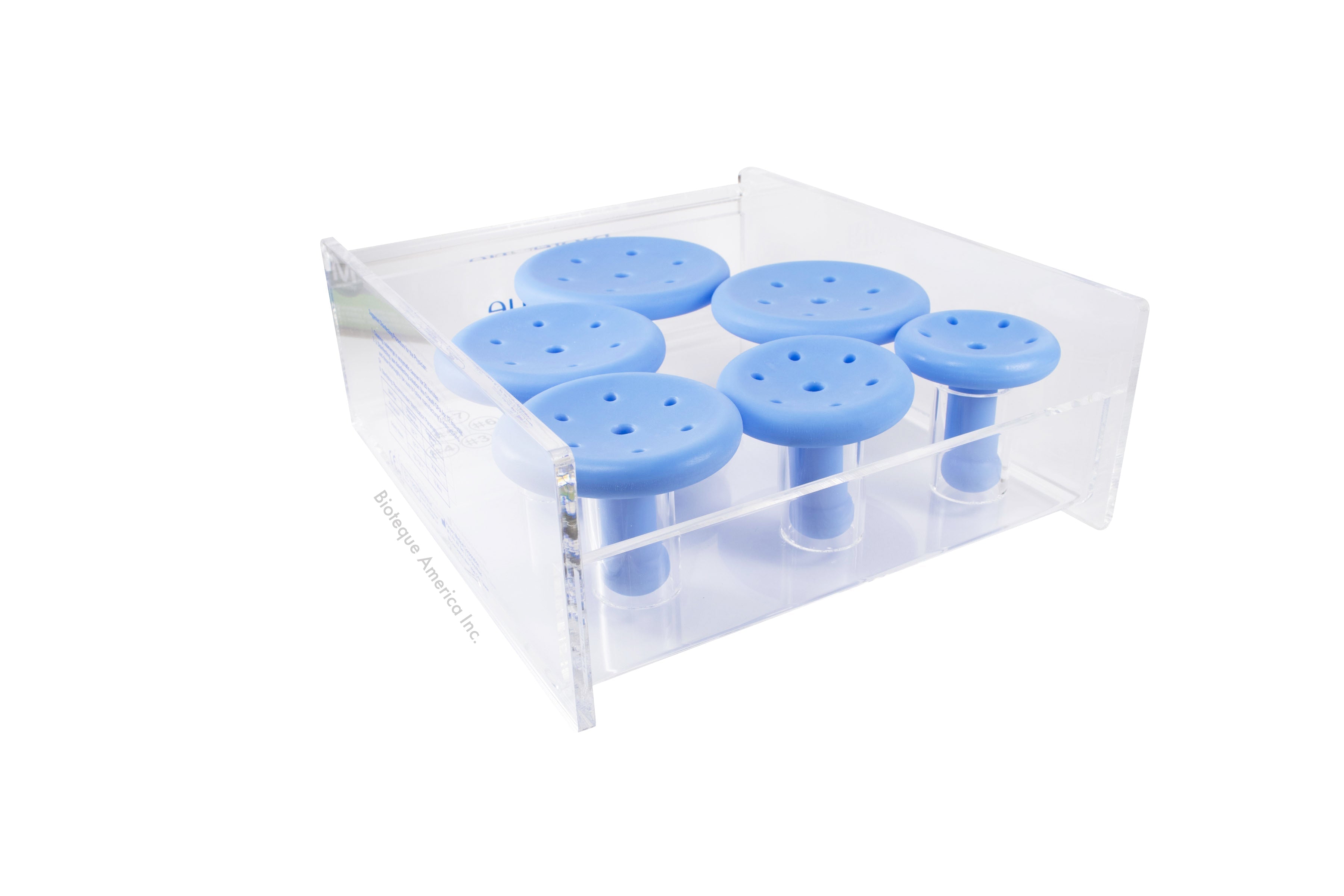
Pelvic organ prolapse affects an estimated one in three women over the course of their lifetime — and for most of them, a pessary will be the first treatment offered. The challenge for clinicians is that “POP” is not a single diagnosis: anterior wall prolapse, posterior wall prolapse, and apical descent each have distinct anatomical drivers and respond differently to the shapes available in your fitting kit. This guide maps POP-Q staging to pessary selection logic, compartment by compartment, so your fitting decisions are grounded in both anatomy and evidence.
In this guide:
- Why compartment identification drives pessary selection more than stage number alone
- POP-Q staging definitions and the measurements that matter most at the fitting table
- Support vs. space-filling pessary mechanisms and the clinical evidence behind each
- Compartment-specific selection logic for anterior, posterior, and apical prolapse
- Stage III–IV fitting strategy, shared decision-making, and follow-up protocol
Why Pelvic Organ Prolapse Demands a Compartment-First Approach
Pelvic organ prolapse is the herniation of one or more pelvic organs into or beyond the vaginal canal. The three anatomical compartments are the anterior compartment (bladder and urethra, descending as cystocele or urethrocele), the posterior compartment (rectum and small bowel, herniation as rectocele or enterocele), and the apical compartment (uterine descent or post-hysterectomy vaginal vault prolapse). Multicompartment involvement is the rule, not the exception — most symptomatic POP involves at least two compartments simultaneously.
Compartment identification determines whether a support or space-filling pessary is the appropriate starting point. Support pessaries — ring, ring with support, dish, Hodge, Gehrung — address anterior and mild apical defects by resting on the pubic symphysis and posterior fornix. Space-filling pessaries — Gellhorn, Cube, Donut — occupy vaginal space through suction or volume and remain in position even when pelvic floor support is severely compromised.
Key symptom clusters by compartment:
- All compartments: vaginal bulge, pelvic pressure, heaviness worse with prolonged standing or Valsalva
- Anterior (cystocele): voiding difficulty, incomplete bladder emptying, positional urinary urgency
- Posterior (rectocele/enterocele): incomplete evacuation, need for manual splinting, rectal pressure
- Apical (uterine/vault): low back pain, dragging pelvic pressure, sensation of descent
Symptom severity correlates poorly with stage until the leading edge reaches or passes the hymen (stage II or greater). Genital hiatus (GH) measurement alongside POP-Q staging is therefore integral to fitting decisions — a wide hiatus predicts support pessary failure regardless of stage.
POP-Q Staging: The Framework Underlying Pessary Selection
The Pelvic Organ Prolapse Quantification (POP-Q) system — agreed by the International Continence Society, AUGS, and the Society of Gynecologic Surgeons in 1996 — is the current staging standard. The Baden-Walker system remains in circulation as a legacy method but lacks the measurement precision needed for reproducible clinical documentation. The AUGS POP-Q interactive assessment tool is a practical office reference.
Six anatomical landmarks are measured in centimeters relative to the hymen: Aa and Ba on the anterior wall, C (cervix or vaginal cuff) and D (posterior fornix) at the apex, and Ap and Bp on the posterior wall. Three additional landmarks — genital hiatus (GH), perineal body (PB), and total vaginal length (TVL) — provide anatomical context. Negative values indicate positions above the hymen (normal); positive values indicate prolapse below the hymen.
Stage definitions per the POP-Q standard:
- Stage 0: No prolapse; all measurement points at or above −3 cm
- Stage I: Leading edge more than 1 cm above the hymen (most distal point < −1 cm)
- Stage II: Leading edge between −1 cm and +1 cm of the hymen
- Stage III: Leading edge more than +1 cm below the hymen but no more than TVL − 2 cm
- Stage IV: Complete or near-complete eversion; leading edge at or beyond TVL − 2 cm
Two POP-Q measurements are particularly predictive of pessary fitting outcomes: a GH of 3.75 cm or greater is an independent predictor of apical support loss and reduced ring pessary retention; TVL below 6 cm limits shape and size options for all pessary categories. The table below previews stage-to-pessary mapping; the full algorithm is in the companion POP-Q staging and pessary selection reference.
| Stage | Clinical Presentation | First-Line Pessary | Second-Line |
|---|---|---|---|
| I–II | Mild symptoms, leading edge proximal to or at hymen | Ring, Ring with Support | Dish |
| III | Leading edge >1 cm past hymen | Ring with Support, Gellhorn | Donut, Cube |
| IV | Complete eversion | Gellhorn, Cube, Donut | Combination |
Stage III–IV prolapse and/or a genital hiatus greater than 4 cm typically warrants a space-filling pessary over a support pessary.
Support vs. Space-Filling Pessaries: Choosing the Right Mechanism
Support pessaries rest on the posterior vaginal fornix and pubic symphysis, restoring pelvic organ position through elevation. The ring, ring with support, dish, Hodge, and Gehrung operate via this mechanism. Retention depends on adequate posterior fornix depth and a genital hiatus narrow enough to prevent expulsion during Valsalva. The ring with support adds a membrane bridge that provides additional bladder support — making it the most broadly applicable support pessary for anterior and mild apical prolapse.
Space-filling pessaries occupy vaginal lumen by suction or volume, resisting expulsion even when pelvic floor support is severely compromised. The Gellhorn achieves retention through a concave disc creating suction at the vaginal apex; the Cube uses six concave silicone faces for distributed suction; the Donut relies on solid torus volume. These devices do not depend on the pubic symphysis for support and are indicated when GH is wide, TVL is short, or staging is III–IV.
The PESSRI trial (Cundiff et al., 2007) randomized 134 women with a median POP-Q stage of III to a crossover comparison of ring with support versus Gellhorn. Both pessaries produced statistically and clinically significant improvements in PFDI and PFIQ scores, with no clinically significant difference between the two. The trial concluded that ring with support and Gellhorn are effective and equivalent for symptomatic relief — fitting success and patient tolerance, not shape hierarchy, should drive selection.
The Cochrane 2020 review (Bugge et al.) analyzed 4 RCTs involving 478 women and found that pessary combined with pelvic floor muscle training (PFMT) probably improves POP symptoms and prolapse-specific quality of life compared to PFMT alone (RR 2.15, 95% CI 1.58–2.94; moderate-certainty evidence). Limited head-to-head RCT data on individual shapes confirms that clinical judgment and anatomy are the principal selection drivers.
Anatomical risk factors predicting support pessary failure:
- Prior prolapse surgery or hysterectomy (absent cervical support)
- TVL below 6 cm
- GH greater than 4 cm
- Stage III–IV multicompartment prolapse
Browse Minerva’s Prolapse Solutions collection for the full range of support and space-filling pessaries for clinical fitting programs.
Anterior Wall Prolapse (Cystocele): Pessary Options and Fitting Considerations
Cystocele — anterior vaginal wall descent with bladder herniation — is the most common compartment involved in symptomatic POP. Urethrocele frequently coexists. The relevant POP-Q points are Aa (midline anterior wall 3 cm proximal to the hymen) and Ba (most distal portion of the upper anterior wall).
The first-line pessary for anterior wall prolapse is the ring with support. Its integrated silicone membrane bridges the anterior defect and provides bladder base elevation while the ring seats against the posterior fornix and pubic symphysis. It is well-tolerated long-term, allows sexual activity, and is feasible for patient self-management with instruction. The ring pessary and its available fitting sets support systematic size selection across the stage II–III range. The dish pessary offers a broader support surface and is appropriate for mild-to-moderate anterior prolapse when a wider contact area is preferred.
Escalate beyond a support pessary when Ba exceeds +3 cm, GH exceeds 4 cm, TVL falls below 6 cm, the ring continues to expel despite correct sizing, or associated uterine descent undermines anterior support. The Gellhorn pessary provides anterior support plus apical stability and is the appropriate next step when rings fail in anterior-dominant cases with concurrent apical loss.
Occult SUI caveat: Cystocele mechanically kinks the urethra, masking latent stress urinary incontinence. When the pessary corrects the anterior prolapse, urethral kinking resolves and SUI may emerge. Perform a cough stress test before fitting and again immediately after — if SUI is unmasked, incorporate a ring with knob or incontinence dish. See the companion post on choosing a pessary for anterior wall prolapse for detailed cystocele fitting protocols.
Posterior Wall Prolapse (Rectocele/Enterocele): When Standard Rings Fall Short
Posterior compartment prolapse encompasses rectocele (posterior vaginal wall descent with rectal herniation) and enterocele (small bowel herniation between uterosacral ligaments). The relevant POP-Q points are Ap and Bp. Dominant posterior symptoms include splinting, incomplete evacuation, and rectal pressure — symptoms that a standard ring pessary does not adequately address, as the ring primarily elevates the anterior wall and apex without directly engaging the posterior compartment.
The Gehrung pessary is the most anatomically targeted option for combined anterior and posterior prolapse. Its arch shape rests along both vaginal walls simultaneously, providing anterior and posterior support concurrently. The Gehrung is manually moldable silicone, allowing individualized fit in patients with asymmetric defects or atypical vaginal dimensions. The Hodge pessary operates as a lever device — the posterior bar seats in the posterior fornix and the anterior limb lodges behind the pubic symphysis — making it suited to mild uterine retroversion with associated posterior descent at stage I–II. It is less useful after hysterectomy, where the absence of a cervix prevents stable positioning.
If posterior prolapse is advanced (Bp > +3 cm), or if dominant posterior symptoms persist after correct Gehrung fitting, escalation to the Gellhorn provides apical anchoring that secondarily reduces posterior pressure. Persistent bowel dysfunction symptoms despite pessary management — obstructed defecation, fecal incontinence — warrant surgical consultation, as pessaries address prolapse anatomy, not functional bowel pathology. The companion post on choosing a pessary for posterior wall prolapse covers the Gehrung, Hodge, and escalation logic in detail.
Apical and Uterine Prolapse: Gellhorn, Cube, and Donut Indications
Apical prolapse describes descent of the uterus (uterine prolapse) or the vaginal vault in patients who have undergone hysterectomy. Both represent failure of the uterosacral-cardinal ligament complex. POP-Q Point C quantifies apical position relative to TVL. Apical prolapse changes the pessary selection logic significantly: ring pessaries partially rely on the cervix seating against the posterior fornix for stability. After hysterectomy, this anatomical anchor is absent — ring pessaries expel frequently in vault prolapse patients. A wide GH combined with absent cervical support makes the Gellhorn the default starting point for post-hysterectomy vault prolapse.
The Gellhorn pessary is the most commonly prescribed space-filling pessary and the standard of care for moderate-to-advanced apical prolapse. Its firm disc base creates suction at the vaginal apex while the central stem prevents axial rotation. Long-stem variants are available for patients with deep apical descent. Most patients require clinician removal — this should be communicated at the first fitting visit. Sizing typically begins at 2.5–3.0 inch diameter, confirmed with Valsalva testing and ambulation.
The Donut pessary is a solid silicone torus that fills vaginal space through volume. It is particularly useful for stage II–III uterine prolapse when the uterus is still present and the vault is spacious. The Cube pessary is a flexible six-sided device creating distributed suction via six concave faces. It is indicated for stage III–IV prolapse when Gellhorn and Donut have failed — it functions as a pessary of last resort before surgical referral. The Cube requires daily or nightly removal and cleaning due to secretion accumulation in its concave surfaces; a retrieval string simplifies removal. The companion post on choosing a pessary for uterine and apical prolapse addresses Gellhorn, Donut, and Cube fitting in depth.
Stage 3–4 Advanced Prolapse: Fitting When Anatomy Is Challenging
Stage III–IV prolapse presents the greatest fitting challenge: wide GH, reduced TVL, severe mucosal atrophy, and multicompartment descent. Despite these complexities, a pessary remains a clinically appropriate option across all POP stages, including stage IV procidentia.
Pre-fitting assessment checklist for stage III–IV:
- Empty the bladder; assess postvoid residual if voiding difficulty is reported
- Inspect the vaginal mucosa — active ulceration or erosion is a contraindication to fitting; a 4–6 week course of low-dose vaginal estrogen should precede pessary placement
- Measure TVL and GH; TVL below 6 cm and GH above 4 cm together indicate that only space-filling options are viable
- Manually reduce the prolapse to assess reducibility and identify dominant compartment(s)
- Perform a cough stress test after manual reduction to identify occult SUI
The Gellhorn is first-line for stage IV; sizing typically begins at 2.5–2.75 inch diameter, tested with Valsalva, coughing, and ambulation, with approximately 1 cm of circumferential clearance between disc rim and vaginal wall. When the Gellhorn is expelled despite correct sizing, trial the Cube. Local estrogen therapy is an important adjunct for postmenopausal patients with atrophic mucosa — it improves mucosal integrity and may improve fitting success. Erosion and ulceration risk is elevated in advanced prolapse; follow-up at 1–2 weeks post-fitting is required, then every 3–6 months. The companion post on stage 3–4 prolapse and pessary management provides extended clinical guidance.
Pessary as Bridge vs. Definitive Management: Shared Decision-Making Framework
ACOG’s position is that symptomatic women should be offered a pessary as an alternative to surgery — appropriate as sole long-term management, not merely as a preoperative bridge. Clinicians who frame pessary management only as temporary may inadvertently steer patients away from a valid definitive option.
Indications where long-term pessary management is appropriate:
- Patient preference to avoid surgery
- Medical comorbidities elevating surgical risk (cardiac disease, anticoagulation, high BMI, pulmonary disease, frailty)
- Desire for future fertility
- Recurrent prolapse after prior surgical repair with patient declining reoperation
- Prolapse occurring in pregnancy or early postpartum
Continuation data: short-to-medium-term studies report prolapse symptom resolution in 70–90% of successfully fitted patients (IUGA expert opinion on vaginal pessaries in POP). Continuation rates at one year approximate 60–70%; a 14-year follow-up cohort reported continuation in approximately 14%, reflecting accumulation of discontinuation decisions over time rather than acute failure. Common discontinuation reasons include desire for surgery, stage III–IV posterior wall prolapse, discomfort, and inability to self-manage.
A structured counseling framework:
- Surgery aims for anatomical correction; pessary manages symptoms by supporting the prolapsed tissue in position
- Pessary avoids surgical risk but requires adherence to a follow-up schedule
- The two options are not mutually exclusive — patients may use a pessary for years, then elect surgery
- Neither option is universally superior; the decision should reflect patient values and priorities
Bridge therapy is legitimate: pessary reduces vaginal ulceration from severe prolapse before planned repair and provides symptom control for patients awaiting surgery on a waitlist. For an expanded shared decision-making discussion, see the companion post on pessary vs. surgery for pelvic organ prolapse.
Follow-Up, Complications, and When to Escalate
A pessary fitting is not a one-time intervention. Follow-up schedule:
- 1–2 weeks post-initial fitting: Assess comfort, retention during activity, and any occult SUI not detected at the initial visit
- Every 3–12 months ongoing: Pessary removal, cleaning, mucosal inspection, and refitting assessment. Symptomatic or higher-risk patients (stage III–IV, Gellhorn or Cube users, atrophic mucosa) should be seen every 3 months; low-risk self-managing patients may extend to 12 months per IUGA/ACOG guidance
Common adverse events and management, based on the Cochrane 2020 data:
- Vaginal discharge or odor: Remove and clean the pessary; consider low-dose vaginal estrogen; a pH-lowering vaginal gel may reduce bacterial colonization
- Vaginal erosion or ulceration: Remove the pessary immediately; apply estrogen cream for 4–6 weeks; refit when mucosa has healed
- Urinary incontinence (new or worsened): Perform cough stress test; if SUI is unmasked, consider ring with knob or incontinence dish; rule out urinary retention
- Pessary expulsion: Trial a larger size within the same shape before changing shapes; if maximum size fails, escalate to a space-filling pessary
Hard-stop criteria requiring urgent clinical reassessment — never managed at home:
- New-onset vaginal bleeding
- Suspected fistula
- Urinary or bowel obstruction
- Inability to void after pessary placement
- Severe pelvic pain
- Pessary that cannot be removed at a scheduled visit (incarceration)
Pessaries are reusable medical devices — not permanent implants. Silicone pessaries should be cleaned at each follow-up visit. Physical replacement is typically needed every 1–3 years depending on condition. The StatPearls pelvic organ prolapse overview (https://www.ncbi.nlm.nih.gov/books/NBK563229/) provides a comprehensive clinical summary of POP evaluation and management options. For clinicians building a fitting program, the pessary fitting sets collection at Minerva Health includes systematic sets for ring with support, Gellhorn, dish, cube, and additional shapes.
Frequently Asked Questions
Which pessary is best for pelvic organ prolapse?
No single pessary is best for all cases. Selection depends on prolapse compartment, POP-Q stage, genital hiatus measurement, total vaginal length, prior hysterectomy status, and patient self-management capacity. The ring with support is a common starting point for stage II–III anterior or multicompartment prolapse with a normal genital hiatus; the Gellhorn is typically preferred for stage III–IV or when the ring fails. A systematic fitting approach using a fitting set, tested with Valsalva and ambulation, determines the appropriate shape and size for each patient.
Can a pessary be used instead of surgery for prolapse?
Yes. ACOG recommends offering a pessary as an alternative to surgery for symptomatic POP at all stages. Many patients manage their prolapse with a pessary for years; it is an appropriate definitive management strategy, not solely a surgical bridge. Patients who are poor surgical candidates, prefer non-surgical management, or wish to preserve fertility are all appropriate candidates for long-term pessary management.
How does POP-Q staging guide pessary selection?
Stage I–II prolapse typically responds well to support pessaries such as the ring, ring with support, or dish. Stage III–IV prolapse or a genital hiatus greater than 4 cm often requires space-filling pessaries — Gellhorn, Cube, or Donut. The genital hiatus and total vaginal length refine selection beyond stage number: a stage II patient with a GH of 4.5 cm may fail a ring pessary that would succeed in a stage III patient with a narrower hiatus.
What are the most common reasons patients discontinue pessary use?
Cohort studies consistently identify desire for surgical correction, stage III–IV posterior wall prolapse, device discomfort, expulsion despite correct sizing, and inability to self-manage as the leading discontinuation factors. Long-term continuation declines steadily over years; discontinuation most often reflects a change in patient preference rather than device failure.
How often should a pessary be replaced for pelvic organ prolapse management?
Silicone pessaries should be removed and cleaned at each follow-up visit, typically every 3–12 months depending on self-management capability and risk profile. Physical device replacement is generally needed every 1–3 years based on condition. Clinicians should assess device integrity at every visit — cracking, surface changes, or deformation in silicone are indications for replacement regardless of calendar interval.
This article is for informational purposes for healthcare professionals. It does not constitute medical advice or replace clinical judgment. Always follow your institution’s protocols and the manufacturer’s instructions for use.


