
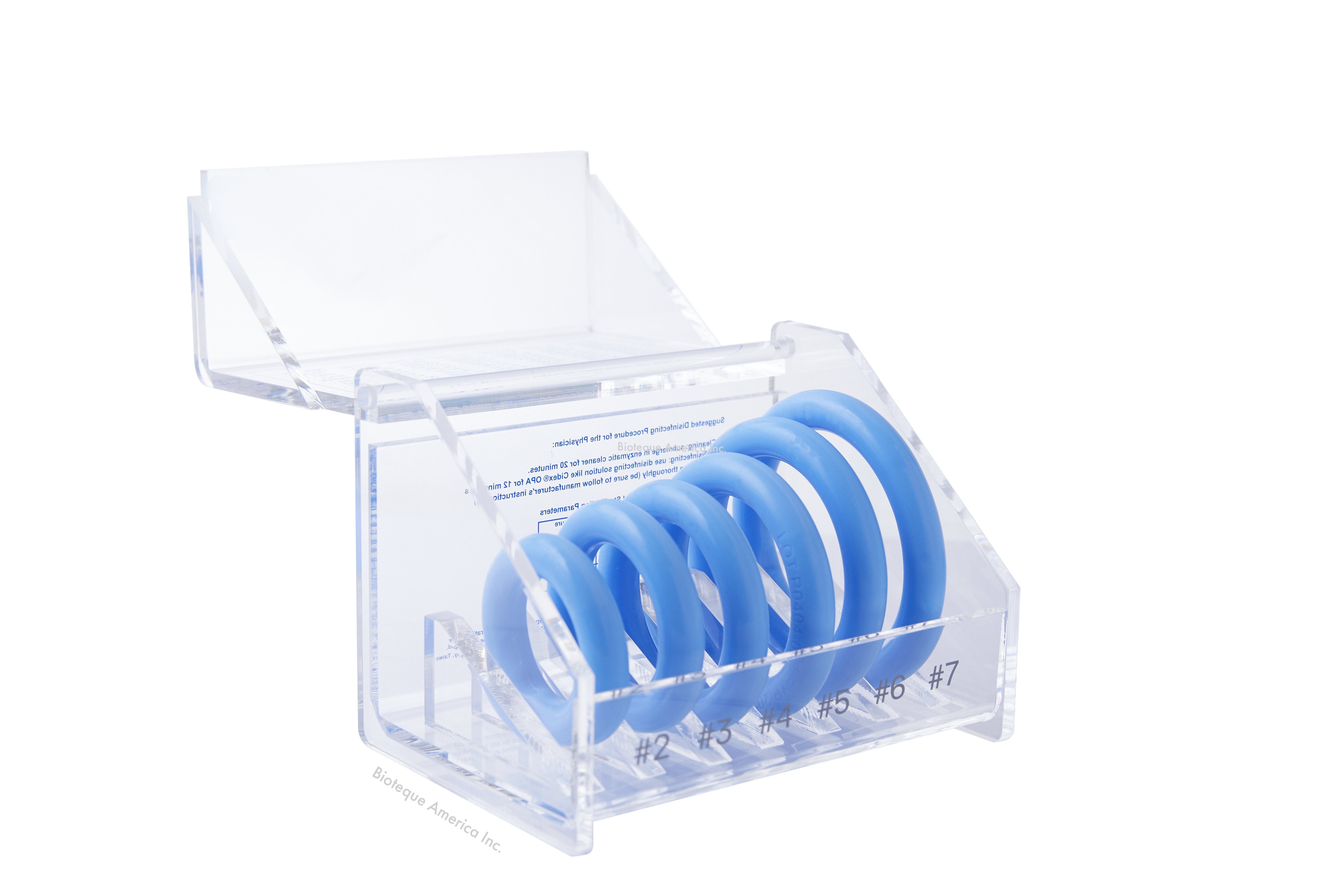
What Is a Vaginal Pessary? Definition and Clinical Role
A vaginal pessary is a removable intravaginal device—most commonly made of medical-grade silicone—designed to support prolapsed pelvic organs, reduce prolapse-related symptoms, or compress the urethra against the pubic symphysis to manage stress urinary incontinence (SUI). Pessaries are not a cure: they manage symptoms and support pelvic organs. They are reusable medical devices with defined replacement schedules, not permanent implants.
Pessaries are distinct from contraceptive diaphragms. While the Milex Wide-Seal Arcing and Omniflex diaphragms share a similar intravaginal placement, they are a separate device category requiring a separate prescription and are not therapeutic pessaries.
The clinical case for pessary therapy is substantial. Approximately 40% of women will experience some degree of pelvic organ prolapse (POP) during their lifetime, and surveys indicate that more than 75% of physicians offer a pessary as first-line management before surgical referral. Pessaries are FDA 510(k)-cleared Class II medical devices; most require a clinician’s prescription in the United States under 21 CFR Part 884 (gynecological devices).
For a full range of available shapes, see Minerva’s pessary collection.
Clinical guidance from ACOG Practice Bulletin 214 — Pelvic Organ Prolapse (2019) recommends offering pessary management to all patients with symptomatic POP who desire a non-surgical option, regardless of prolapse stage.
Clinical Indications — When to Consider a Pessary
Pessaries are appropriate across a wide range of presentations. Understanding the primary indication shapes shape and size selection from the first fitting.
Pelvic organ prolapse (stages 1–4 per POP-Q): Pessaries are appropriate at all stages of POP. Stage and anatomy guide shape selection; support pessaries are typically trialed first for lower-stage prolapse, while space-filling shapes are reserved for higher stages or when support pessaries fail to provide adequate retention.
Stress urinary incontinence: Knob-bearing pessary designs (ring with knob, dish with knob) mechanically compress the urethra against the pubic symphysis during increases in intra-abdominal pressure, reducing leakage. This mechanism is distinct from prolapse support and may be applied with or without coexisting prolapse.
Mixed POP and SUI: The ring with knob pessary is a common dual-function option for patients presenting with both prolapse and stress incontinence. Correct knob positioning at the 12 o’clock (anterior) position is essential for urethral compression to be effective.
Cervical insufficiency in pregnancy (Arabin/Hodge): This indication is outside the scope of the Minerva catalog. Clinicians managing second-trimester cervical support should refer to a maternal-fetal medicine specialist for device selection and management protocol.
Contraindications to consider: Active vaginal or pelvic infection, undiagnosed vaginal bleeding, known latex sensitivity (if a latex-containing device is under consideration), and inability to attend follow-up are relative or absolute contraindications depending on clinical context. Vaginal atrophy or ulceration does not permanently preclude pessary use but may require local estrogen treatment before fitting.
The Bugge et al. Cochrane review (2020) provides a comprehensive synthesis of pessary use across indications, fitting approaches, and reported outcomes, and is the most rigorous systematic evidence base currently available for clinical pessary practice.
The Two Functional Categories — Support vs. Space-Filling
All therapeutic pessaries fall into one of two functional categories. This distinction drives the most important clinical decisions at fitting: complexity of insertion, self-management potential, compatibility with sexual activity, and escalation sequence.
Support pessaries rest in the vaginal canal, lodged between the posterior vaginal fornix and the retropubic shelf. They rely on the pubic symphysis for retention and do not create suction or fill vaginal volume. Because they do not rely on tissue contact pressure, they are generally better tolerated, easier for patients to self-manage, and compatible with vaginal intercourse. Shapes in this category include the Ring, Ring with Support, Ring with Knob, Dish, Dish with Knob, Hodge, and Gehrung.
Space-filling pessaries occupy the vaginal space through suction contact (Cube, Gellhorn), volume (Donut, Shaatz), or a combination of mechanisms. They provide higher retention in anatomically challenging presentations—wide vaginal introitus, advanced prolapse stage, prior hysterectomy—but are technically more demanding to insert and remove, are generally not compatible with vaginal intercourse, and carry higher complication risk if follow-up is inadequate. Shapes in this category include the Gellhorn, Cube, Donut, Shaatz, Inflatoball, Mar-Land, and Oval.
The clinical rule of thumb—supported by the evidence in published cohort data on silicone ring, Gellhorn, and donut pessaries in clinical practice (PMC3097351)—is to begin with the least complex option that provides adequate support. Start with the ring or ring with support; escalate to space-filling types based on anatomy and prolapse severity.
Overview of All 12 Shapes — High-Level Decision Matrix
The Minerva catalog covers 12 pessary shapes spanning both functional categories and all major clinical indications. The table below provides a high-level comparison. For a full shape-by-shape clinical decision analysis, see the pessary shape-by-shape decision guide.
| Shape | Category | Primary Indication | Self-Manageable? | Intercourse Compatible? | First-Line or Escalation? |
|---|---|---|---|---|---|
| Ring | Support | Mild–moderate POP (any compartment) | Yes | Yes | First-line |
| Ring with Support | Support | Mild–moderate POP with anterior wall component | Yes | Yes | First-line |
| Ring with Knob | Support + incontinence | POP + SUI (mixed presentation) | Yes (trained) | Yes (knob may cause discomfort) | First-line for mixed |
| Dish | Support | Low-grade anterior prolapse | Yes | Yes | First-line (anterior) |
| Dish with Knob | Support + incontinence | SUI without significant prolapse | Yes (trained) | Possible | First-line for SUI-dominant |
| Hodge | Support | Posterior wall support, uterine retroversion | Yes (trained) | Possible | First/second-line |
| Gehrung | Support | Rectocele, enterocele | Usually clinician | Possible | Second-line (posterior) |
| Gellhorn | Space-filling | Moderate–advanced POP (stage 2–4) | Clinician removal | No | Escalation |
| Cube | Space-filling | Severe POP, wide introitus, poor support | Clinician (nightly self-remove protocol available) | No | Escalation |
| Donut | Space-filling | Uterine prolapse with wide vaginal introitus | Clinician | No | Escalation |
| Oval / Mar-Land | Support | Ring retention failure, oval vault anatomy | Yes | Yes | Second-line |
| Shaatz | Space-filling | Wide vaginal vault, ring not retained | Clinician | No | Escalation |
The ring with support is the most commonly used first-line pessary; the Gellhorn is the standard space-filling escalation for moderate-to-advanced prolapse when ring designs fail.
Brief notes on key shapes:
- Ring: The most widely prescribed pessary; self-manageable; appropriate for the majority of patients presenting with mild to moderate symptomatic POP in any vaginal compartment.
- Ring with Support: Adds a central fenestrated membrane for enhanced anterior vaginal wall support; preferred for cystocele and uterovaginal prolapse where additional bladder support is needed.
- Gellhorn: The standard escalation shape for stage 2–4 prolapse; the disc-and-stem design provides reliable retention through suction and vaginal wall contact. Available in long and short stem variants; removal typically requires a clinician.
- Cube: Six-sided suction device for severe prolapse and wide introitus presentations; highest retention of all pessary types but also the most demanding care protocol—most clinical protocols require nightly removal and cleaning.
- Donut: A thick torus suited for uterine prolapse where vaginal introitus caliber precludes adequate ring retention; not compatible with intercourse.
- Hodge: A curved lever design that uses the pubic symphysis and posterior vaginal wall as retention points; useful for posterior wall support and cases of uterine retroversion.
- Gehrung: An arching design contoured to support the posterior vaginal compartment; indicated for rectocele and enterocele where standard ring shapes do not provide adequate posterior support.
- Mar-Land / Oval: Oval support rings used as alternatives when a standard round ring is not retained; appropriate for anatomical variation in vaginal vault shape.
- Shaatz: A rigid ring variant with a wider-diameter profile; suited for patients with a wide vaginal vault where a standard ring fails to seat.
Pessary Materials — Silicone, PVC, and Latex
Material selection affects durability, patient tolerability, and clinical workflow.
Silicone is the primary material for modern therapeutic pessaries, including the Bioteque and Milex product lines offered through Minerva. Medical-grade silicone is nonporous, does not absorb odor, is compatible with standard soap-and-water cleaning, and has a long service life with proper maintenance. Most silicone pessaries can be autoclaved in accordance with the manufacturer’s instructions for use (IFU).
PVC (polyvinyl chloride) pessaries are an older, lower-cost option. PVC is more porous than silicone, may absorb vaginal discharge and odor over time, and has a shorter effective service life. PVC devices should be considered legacy technology; clinics transitioning from PVC to silicone inventory will note improved patient tolerability and reduced cleaning complexity.
Latex pessaries are uncommon in contemporary clinical practice and carry a significant allergy risk. Screen all patients for latex sensitivity before fitting any latex-containing device. Latex allergy is a contraindication to latex pessary use; silicone devices should be substituted.
To browse and order fitting sets for silicone pessaries by shape, see the pessary fitting set collection.
Fitting Workflow Overview — What Happens at a Pessary Appointment
A vaginal pessary must be fitted by a trained clinician. Shape and size selection requires pelvic examination; no remote or self-selection protocol is appropriate. The following is a high-level summary of the clinical fitting process. For complete step-by-step technique and sizing tables, see the pessary sizing and fitting workflow.
Pre-fitting assessment: Confirm the indication (POP stage per POP-Q, SUI component, prior pelvic surgeries), assess vaginal length and introitus caliber, evaluate tissue integrity (atrophy, active ulceration, or infection preclude immediate fitting), and discuss the patient’s sexual activity and self-management preferences.
Fitting technique: Begin with the smallest pessary that provides adequate support—typically a ring or ring with support at the mid-range of available sizes. Insert, confirm seating in the posterior fornix, and assess patient comfort. Have the patient ambulate, cough, and perform a Valsalva maneuver; the pessary should remain retained and the patient should not feel it at rest.
Post-void residual (PVR) check: The AUGS-SUNA Clinical Consensus Statement on Vaginal Pessary Use (2023) recommends obtaining a PVR after fitting in symptomatic or at-risk patients, as pessary placement can both relieve and—if incorrectly sized—create urethral obstruction.
Follow-up schedule: The AUGS-SUNA 2023 consensus recommends the first follow-up visit within 4 weeks of initial fitting, as the majority of fitting failures and early complications occur in this window. Ongoing follow-up should be scheduled every 3 months for patients who cannot self-manage, and every 6–12 months for patients who can, consistent with ACOG guidance. At each visit: inspect vaginal walls, clean the pessary, assess symptom control, and refit if anatomy or symptom burden has changed.
Insertion and Removal — By Shape Type
Insertion and removal technique varies significantly by functional category. For full procedural detail by shape, see the step-by-step pessary insertion guide and the pessary removal guide, including stuck pessaries.
Support pessaries (ring, dish): These shapes are compressed or folded for insertion. Insert the folded device at approximately 45° toward the posterior vaginal fornix and allow it to spring open; the posterior rim should seat in the posterior fornix and the anterior rim should rest behind the pubic symphysis. Motivated patients with good dexterity can be taught to self-manage ring and dish pessaries after an initial clinical demonstration.
Space-filling pessaries (Gellhorn, cube): These shapes require more deliberate clinical technique and are generally not suitable for patient self-management—particularly the cube. The Gellhorn disc is inserted edge-first, then tilted horizontal once inside the vaginal canal, with the stem oriented toward the introitus. Cube insertion requires compressing the device past the introitus, releasing it to allow suction contact with the vaginal walls, and attaching the retrieval mechanism per the manufacturer’s IFU.
For patients with limited hand dexterity or difficulty reaching the pessary for removal, the Pessary Assistant—a purpose-designed removal aid—can provide mechanical advantage for ring and Gellhorn pessary removal.
Stuck pessary: Pessary incarceration or suction-related retention failure is covered in full in the dedicated cluster post on removal technique.
Cleaning, Care, and Replacement Schedule
Silicone pessaries are durable devices, but their longevity and patient tolerability depend on consistent cleaning and follow-up. For a complete cleaning protocol by shape, including cube-specific nightly removal requirements, see the pessary cleaning, care, and replacement guide.
Standard cleaning: Per the AUGS-SUNA 2023 consensus, pessaries should be cleaned with mild soap and warm water at each office examination and rinsed thoroughly. Avoid harsh disinfectants (bleach, alcohol, hydrogen peroxide), which degrade silicone and may leave irritating residue. Do not boil silicone pessaries; check the manufacturer’s IFU for autoclavable specifications.
Cube pessary — special protocol: The cube pessary requires removal and cleaning in most clinical protocols. Non-compliance with this nightly protocol is a primary risk factor for cube pessary incarceration (embedding of the device into vaginal epithelium).
Replacement criteria: There is no single universal replacement interval for silicone pessaries. Clinical judgment should drive replacement decisions based on device integrity (cracks, deformation, surface pitting), persistent odor despite proper cleaning, or change in patient anatomy. Pessaries are not permanent devices; patients should be informed of this at fitting. Most well-maintained silicone pessaries are designed to remain serviceable for several years, but replacement depends on material, use frequency, and cleaning adherence.
Complications and When to Escalate
The majority of pessary-related complications are minor and manageable with appropriate follow-up. Major complications are uncommon when re-evaluation is scheduled consistently. For detailed complication classification and management protocols, see the pessary side effects and complications guide.
Common, minor findings:
- Increased vaginal discharge—the most frequently reported adverse event; expected in low volumes; warrants investigation if purulent, malodorous, or blood-tinged
- Mild erythema at pessary contact points—a monitoring finding, not an automatic indication for device removal
- Positional discomfort—usually indicates a sizing or seating problem; address with refitting
Moderate and severe complications (AUGS-SUNA 4-tier classification):
- Tier 1: Erythema — monitor; adjust cleaning frequency and follow-up interval
- Tier 2: Abrasion — consider refitting, local estrogen, and reduced wear time
- Tier 3: Erosion/ulceration — remove the pessary; apply local estrogen; confirm healing before reinsertion
- Tier 4: Fistula (vesicovaginal or rectovaginal) — urgent referral to urogynecology; pessary is contraindicated until repaired
Escalation criteria — the following require clinical reassessment, not self-management:
- Vaginal bleeding (any amount)
- Purulent or malodorous discharge
- New pelvic pain
- Voiding difficulty or elevated post-void residual
- Sensation of the pessary dropping or prolapsing out
- Inability to remove the pessary (in self-managing patients)
Pessary incarceration: Rare but serious—partial or complete embedding of the pessary into the vaginal epithelium following prolonged retention without clinical follow-up. Requires careful clinical assessment and, if office management fails, referral to a urogynecologist. Prevention is the most effective strategy: schedule follow-up at fitting and confirm the appointment before the patient leaves.
The Bugge et al. Cochrane 2020 review documents adverse event categories and rates across pessary types, providing a useful evidence base for counseling patients on complication risk at fitting.
Using This Guide — How the Pillar and Clusters Work Together
This article is the clinical reference hub for the full Minerva pessary content program. Each section above introduces a topic at the level needed for clinical orientation; dedicated cluster posts provide the procedure-level detail required for bedside practice.
- For shape selection by indication and anatomy: see the pessary shape-by-shape decision guide
- For sizing tables, fitting technique, and fitting kit selection: see the pessary sizing and fitting workflow
- For step-by-step insertion technique by shape: see the how to insert a pessary guide
- For removal technique, including stuck and impacted pessaries: see the pessary removal guide, including stuck pessaries
- For cleaning protocols, care, and replacement criteria: see the pessary cleaning, care, and replacement guide
- For complication classification and escalation protocols: see the pessary side effects and complications guide
To browse the full Minerva pessary range and fitting kits: browse Minerva’s full pessary range.
Frequently Asked Questions
What is the difference between a support pessary and a space-filling pessary?
Support pessaries rest against the pubic symphysis and rely on the retropubic shelf for retention. They do not create suction or fill vaginal volume, which makes them generally easier for patients to self-manage and compatible with vaginal intercourse. Space-filling pessaries occupy the vaginal space through suction contact or volume to prevent prolapse descent. They are typically reserved for more advanced prolapse, wide vaginal introitus, or cases where support pessaries fail to provide adequate retention, and they are generally not compatible with intercourse. The choice between categories is driven by prolapse stage, vaginal anatomy, patient lifestyle, and self-management capacity—not by any single factor alone.
Does a pessary require a prescription?
In the United States, most vaginal pessaries are FDA 510(k)-cleared Class II medical devices under 21 CFR Part 884 that require a clinician’s prescription and must be fitted by a trained healthcare professional. Fitting kits are clinician-only items. Over-the-counter availability of certain pessary types may vary; regardless, a clinical fitting examination is required to determine the correct shape and size for each patient.
How often does a pessary need to be replaced or refitted?
There is no single universal replacement or refitting interval. ACOG guidance recommends follow-up every 3–4 months for patients who cannot self-manage their pessary, and annually for patients who can self-manage. The AUGS-SUNA 2023 consensus recommends the first follow-up visit within 4 weeks of initial fitting. Silicone pessaries may remain serviceable for several years; replacement is based on device integrity and clinical factors such as changes in patient anatomy, persistent odor, or device deformation—not a fixed calendar schedule.
Can a patient wear a pessary during intercourse?
Support pessaries—including the ring, ring with support, and dish—are generally compatible with vaginal intercourse and do not require removal beforehand. Space-filling pessaries (Gellhorn, cube, donut) are not typically worn during intercourse and require removal prior to sexual activity. The ring with knob and dish with knob may cause discomfort during intercourse depending on position and anatomy; discuss this with the patient at fitting and adjust accordingly. For patients where sexual activity is a priority, selection of a support-category pessary is strongly preferred.
What should a clinician do if a pessary cannot be removed in the office?
Pessary incarceration—partial or complete embedding into the vaginal epithelium—requires careful clinical assessment before any removal attempt. Do not apply forcible traction without adequate visualization, lubrication, and analgesia. First-line options include thorough lubrication and reattempted standard removal technique, breaking suction alongside space-filling pessaries with a fine instrument, and use of the Pessary Assistant for mechanical advantage on ring and Gellhorn pessaries. If initial attempts fail, local estrogen cream applied for 2–4 weeks to improve tissue pliability followed by a second removal attempt is a recognized approach. If the pessary remains unremovable or there is evidence of tissue necrosis or fistula formation, refer promptly to a urogynecologist. The full stuck-pessary removal protocol is covered in the dedicated cluster post.
This article is for informational purposes for healthcare professionals. It does not constitute medical advice or replace clinical judgment. Always follow your institution’s protocols and the manufacturer’s instructions for use.